Bluebirds over
Across Europe, many people were subjugated, and the power of the Axis seemed unbeatable.
It was in this context, in 1941, that Nat Burton wrote lyrics set to a tune composed by Walter Kent. The song was recorded by Vera Lynn in 1942 and quickly became a hit, subsequently covered by the Glenn Miller Orchestra, the Kay Kyser Orchestra, Jimmy Dorsey, Sammy Kay, Kate Smith, and others. The song provided hope in the difficult days of a growing world war:
There’ll be bluebirds over
The white cliffs of Dover
Tomorrow
Just you wait and see
There’ll be love and laughter
And peace ever after
Tomorrow
When the world is free
Nat Burton must not have known that the bluebird is not indigenous to the UK. British listeners to the song might have thought it a reference to blue-colored swallows, often cited as harbingers of spring, which do frequent the cliffs.
Like many popular songs of the 1940s, it has fallen into partial obscurity. It is seldom sung these days, and when it is, it is considered to be “old-time.”
The relative obscurity of the song, combined with its belonging to the mid-20th Century, may have been a factor in how shocked the judges of Britain’s Got Talent were in 2010 when 10-year-old Chloe Hickinbottom stood on the stage of that show and belted out the song like a big band crooner. Her performance has been preserved and has been viewed by millions on YouTube. There is something about the very young girl singing such an old song with such intensity and passion that grips audiences.
I was thinking of Hickinbottom’s performance when I looked up the lyrics of the song last night. The rapid rise of fascism in the United States, combined with the expansionist talk of the current President of the US, has shocked the world. Like many others, I have seen a lot of parallels with the rise of fascism in Germany, Italy, and other parts of Europe in the 1940s. As music is an integral part of my life and plays a crucial role in my emotional regulation, I often turn to popular songs for signs of courage and hope. I could, however, only remember the words to the chorus. Looking up the lyrics revealed a direct reference to the air war over England:
I’ll never forget the people I met
Braving those angry skies
I remember well
as the shadows fell
The light of hope in their eyes
And tho’ I’m far away
I can still hear them say
“Thumbs Up!”
For when the dawn comes up
Other verses use the chorus as a promise to the frightened people of the United Kingdom as war raged overhead, bombs rained down, and invasion seemed imminent:
When night shadows fall
I’ll always recall
Out there
Across the sea
Twilight falling down
On some little town
It’s fresh
in my memory
I hear mother pray
and to her baby
Say
“Don’t cry,”
Follow those verses with the chorus, “There’ll be bluebirds over the white cliffs of Dover, tomorrow, just you wait and see.” The result is powerful hope in hard times.
As we continue to stand up for the Constitution and for our neighbors and friends, we are entering dark times. As such, it is essential to remember that we are called beyond resistance. We are called to hope. I’ll keep looking for new songs to lift our spirits in these days, and as I do, I’ll never forget the power of a ten-year-old singing a song that was six decades old when she was born. Music transcends time.
May we all have the courage to teach our children and grandchildren the old songs.
Failures of courage
There is nothing new or unique in the arguments. School Boards across the United States and around the world have created similar lists and removed books from libraries. The list of books compiled by the Edmonton School Board is typical of those compiled by other school boards. It contains mostly works of fiction. Included are The Handmaid’s Tale, The Color Purple, The Godfather, and Jaws. Books from George R.R. Martin, Sarah J. Maas, and Maya Angelou are also on the list. A series of Manga by Kanoko Sakurakoji has been included. The Great Gatsby is considered suitable for students in grade 10 or younger.
The list is an attempt to prevent students from obtaining books with explicit sexual content. However, what constitutes sexual content and whether or not it is explicit is subject to debate.
Book bans are based on fear, not educational research. Proponents of book bans often claim that reading books with explicit sexual content increases sexual activity among teens, though there is no evidence that this is the case. Carefully designed sexuality education has been shown to decrease sexual activity among children and teens. The proponents of book bans also fear sexuality education in schools.
Fear is an emotion, and it is not rational. Rational arguments don’t work to calm fears. Fear has evolved in humans and other animals as a protective reaction to danger. In the event of an animal attack, for example, being able to act quickly without deliberation can be lifesaving. But fear can also be debilitating. Excessive fear reactions when danger is not present can become a mental illness. When a person develops a mental state characterized by irrational and persistent feelings of suspicion, mistrust, and persecution, that person can become unable to pursue normal activities. This state is called paranoia. The word paranoia comes from the Greek word for madness.
Paranoia results not only in a persistent state of fear, but it can also suppress normal fear when real danger is present. In extreme cases, it can result in self-harm. When groups of people exhibit fear that is disconnected from actual danger, civil society begins to break down.
The fear of books frequently diverts attention from more serious threats. Parents, school boards, and other governmental agencies that are distracted by sexual content in books often ignore the real danger of inaccurate portrayals of sexual activity online. Protecting children requires identifying real threats and responding to them effectively.
The danger is not libraries. The threat is not which books are on the shelves. The real danger travels virtually unregulated over the Internet into personal devices in the hands of children and youth. The time children and youth invest in reading books increases their safety.
The problem reaches far beyond books. We live in an increasingly paranoid society. Last week, teams of firefighters were pulled from the largest wildfire in Washington for interrogation by ICE agents. Members of firefighting crews were detained and removed from the fire lines. The irrational quotas and extrajudicial disappearances of people working to protect others are all driven by fear. Like the fear of books, the fear of immigrants is irrational. It bears no connection to real threats. There is no evidence that rounding up immigrants decreases crime. Removing firefighters from their work increases public danger.
Government waste and fraud pose a danger to any civil society. Eliminating the social safety network doesn’t decrease waste and fraud. Reducing benefits for people in need of Medicare, while pardoning an individual convicted of more than $1 billion in Medicare fraud, does not decrease corruption.
Like ICE agents increasing public danger by interrupting firefighting activities, those promoting the banning of books from libraries also increase public danger. Children and youth are capable of developing critical thinking, making informed decisions, and demonstrating courage. They won’t learn those skills from systematic bans that have resulted from failures of courage. They can learn those skills from reading books and by being allowed to make decisions about what to read.
Fear, however, is not rational. Fear-based governments often succeed in the short term. Individuals without courage momentarily gain power and exercise that power to increase fear in others. The result in the long term, however, is that fear continues to grow to the point where nothing is trusted. Fear-based leadership leads to increased isolation, secrecy, and danger. Eventually, the threat overwhelms the proponents of fear.
Book banners will not succeed in preventing children and youth from learning about sexuality. They may, however, prevent children and youth from discussing the things that are most important in their lives with adults.
With a distinct lack of public figures willing to demonstrate courage, here are a few books that so far are not banned that children and youth can read to learn about real courage: The Story of Ruby Bridges by Robert Coles, Good Night Stories for Rebel Girls by Elena Favilli and Francesca Cavallo, The Wonderful Things You Will Be by Emily Winfield Martin, Jabari Jumbs by Gaia Cornwall, Tomorrow I’ll Be Brave by Jessica Hische, and Courageous People Who Changed the World by Heidi Poelman.
Parents and grandparents can demonstrate courage to their children by taking them to the library, allowing them to select their own books, and reading them together.
For the good folks of Edmonton, I recommend that they spend less time arguing about book lists and titles and more time reading the books.
Oops!
It was a long time ago, and I’ve told the story so many times that the details are a bit hazy. Researchers have found that the stories we tell most often are the ones that are most likely to be embellished. I’m fairly certain that the remembered classmate failed the driver’s test on the first attempt due to difficulties with parallel parking. I also know that the story was retold immediately and repeatedly in our town. Farmers told each other about it at the feed store. Downtown business owners shared the story over coffee at the cafe. And the story was told at every gathering of high school students for several years. It wouldn’t surprise me if students in that town, preparing for their driver’s examinations today, know the story.
I’ve lost touch with the student who was at the center of the story. My hunch is that the story became such an issue that the person moved away from our small town. I don’t know. I did move away from that town, and I passed my driver’s license test without a problem on my first try in a vehicle with a manual transmission. I know, however, that my memories of that time are incomplete. For years, I’ve said that I earned my driver’s license on my fifteenth birthday, but that can’t be the case because my birthday fell on a Saturday that year. I’m sure driver’s license tests were administered only on weekdays, and probably not every weekday in our small town. The real story is that I earned my driver’s license on the first day after my 15th birthday when tests were administered in our small town. Stories are like that.
I’ve thought of the incident multiple times over the years. When my wife’s grandmother was in her nineties, she was involved in a fender-bender accident in her small town in North Dakota. We were living in North Dakota at the time and were aware that it was nearing time for Grandma to stop driving, but none of us had brought up the subject with her. Because she was issued a ticket for failure to yield the right of way, and due to her age, she was required to take the driving portion of the license test to retain her license. To my surprise, she passed. I don’t know what happened on that exam, but I’ve always believed that she must have intimidated the examiner. She wasn’t a very good driver. She would back up her car without looking. It made me nervous to ride when she was driving. But she continued to drive for a couple of years beyond that accident.
It was years ago, and I’ve told the story over and over again, so I’ve probably embellished it quite a bit.
Both stories came to mind this morning when I saw a photograph on the CBC news website of the back end of a bright red Ford Bronco, barely visible among the rubble of a smashed building entrance. The story accompanying the photo reported that an elderly woman was attempting to park, but her foot slipped off the brake and onto the gas pedal, causing the vehicle to accelerate into the building. The story also reported that no one was seriously hurt in the accident. A witness to the aftermath of the crash posted a photo on social media. Clearly visible in the photo was the sign on the building, announcing in both English and French that it is a Driver Examination Center licensed by the Government of Ontario.
That photo has already launched thousands of stories. Online conversations debated whether the driver had passed the examination. The news article I read stated that it was unknown if the driver was parking to take a driver’s test, but the photo is dramatic enough to stir stories in our imaginations.
I’ve often told the story of my brother, who was driving one of our family’s cars, failed to yield at an open intersection, and hit another car. The car he hit was another of our family’s cars, driven by our mother. No one was injured, but my version of the story is that our father made my brother place the call to the insurance company reporting the accident. It seems plausible, but I doubt if my brother remembers the story the same way as I do. He had a lot of accidents in the first years of his driving career. Shortly before my wedding, he slid into a guardrail while delivering my car to me from the body shop. It had been in the shop to have a dent in the fender repaired after I slid into a tree. It returned with the same fender, the door, and the rear fender all dented from the guardrail. The car barely made it to our wedding following a second repair. The paint was so fresh that the brother who had been driving it when it hit the guardrail had to defend it from my other brothers’ attempts to decorate it.
Some accidents, when no one is hurt, become favorite stories. And favorite stories tend to be embellished. Knowing that doesn’t keep me from telling them.
On bended knee
I keep up with the news. I read stories from several online sources each day. I check the headlines from trusted sources. But there are aspects of popular culture that escape me. I have rarely seen the latest movies. I learn what little I do about actors and films mostly from listening to what my friends have to say about them. I’m not drawn to popular music concerts. I’m more likely to listen to classical music, blues, or jazz than I am to the latest pop stars.
I’m not much of a sports fan, either. I enjoy watching a game on television when we are visiting family or friends, but I don’t follow any of the teams and can rarely name the players on any team. I usually know which team won the Super Bowl at the time, but I don’t retain the information. I was pleased when the Chicago Cubs won the World Series, but I have to pause and think hard to remember which year it was.
So, I don’t have much of a reaction to Tuesday’s news that Travis Kelce and Taylor Swift have gotten engaged. I wish them the best. Marriage certainly has been a wonderful part of my life. Somehow, however, the proposal was big enough news that I have read a couple of articles about it. And I learned a bit of trivia that I had not previously been aware of.
I did not know that there is a “right” and “wrong” knee for kneeling when proposing. Some popular culture writers noted that the photos show Kelce kneeling with his right knee on the ground when he proposed to his fiancée. Apparently, the custom is to kneel on the left knee so the right side of the body is slightly elevated as the ring is offered by the right hand to the left hand of your partner. At least that is what I read when I did an internet search on the tradition.
I didn’t kneel when my wife and I decided to get married. My initial conversation about the subject was awkward, and I was nervous. I hadn’t purchased an engagement ring. And we’ve been happily married for 52 years. Apparently, being unaware of the traditions doesn’t affect the quality of a marriage.
During my career, I officiated at many weddings. I developed a series of routines for wedding rehearsals. For a formal wedding, a rehearsal is essential to ensure that everyone is familiar with the processional, knows their place to stand, and understands the general order of the ceremony. However, the rehearsal is a tiny part of the events of a wedding for the couple. I worked hard to conduct rehearsals within a short timeframe and to reassure participants so that they would feel less nervous during the ceremony. One piece of advice I offered to couples pertained to the exchange of rings. I’d say something like this: “You can help your partner by offering the correct finger, but if you are nervous and don’t remember, don’t worry. The marriage will be valid if the ring is placed on the wrong finger.” I told the couples that I would hand them the correct ring after the blessing, so they wouldn’t have to worry about which one to choose. I also advised them that I would place it in the palm of their hand so they wouldn’t drop it. I learned that if I put the ring in the palm of a person’s left hand, they would take it out of that palm with their right hand, and, as long as they didn’t cross their hands as they faced their partner, the ring would naturally end up on the left hand. But I didn’t take a lot of time explaining the procedure.
Rings are symbols. Kneeling is a symbol. Both symbols have roots in history and culture. Many traditions in Western Christian weddings have roots in medieval Europe. The tradition of having a “best man” and “maid of honor” comes from the culture of knights, who had squires and lady-in-waiting from royal courts. Kneeling to propose reflects the tradition of knights kneeling in deference to the authority of a king while receiving the blessing of the king. There are various traditions associated with formal weddings. When a couple told me they wanted a traditional wedding, I asked them to describe what they meant, as there are many traditions, and their idea of a traditional wedding might not align with mine. If requested, I could offer them options for a wedding processional, where the couple and their attendants could stand, as well as other details. However, I would also advise couples that they do not need to be bound by tradition. I tried to get to know the couple well enough to craft a ceremony for them that balanced their desires with the expectations of the community surrounding them and the requirements of the state and church, which are minimal.
In conclusion, I don’t care which knee Kelce used when proposing. I’m guessing Taylor doesn’t care, either. I hope the proposal was special and memorable for them. I hope their ceremony involves promises that both will work hard to keep. I hope they will be happy, even though the press, fans, and critics will surround them. And, for their sake, I hope that they find places of privacy to get away from the crowds and enjoy each other’s company. I, for one, won’t be watching their every move.
Hot temperatures
The people in Lytton, a small town of a couple of hundred people east of Whistler, have a right to be nervous when the weather gets hot. In 2021, Lytton set the record for the hottest temperature ever recorded in Canada at 49.6 °C. That’s 121 F! The next day, a wildfire destroyed most of the village.
We live south of that place, but we also live on the coast, so our temperatures have not been that extreme. However, the region is definitely in the grips of a heat wave. Sections of British Columbia are under a heat warning, and a special weather statement covers much of Vancouver Island. The good news is that the days are getting shorter, and the general trend for daytime temperatures is downward at this time of the year. The bad news is that the stalled high-pressure system is preventing cooler temperatures from the west from entering the region.
One expects high temperatures in the southern United States, but most of Canada is located north of the 49th parallel, and its climate is generally cooler than that of the US. Western Canada, with spectacular mountains, is used to cooler temperatures. No part of the world, however, is immune to global climate change. Higher temperatures, combined with tinder-dry forests, are a recipe for explosive wildfires. Currently, about 70 wildfires are burning in British Columbia, which is about average. In general, the summer has been slightly wetter than average, which has helped alleviate the wildfire situation.
The stalled high-pressure system, however, has resulted in more smoke from BC wildfires drifting south and remaining in our area. We haven’t been able to see the islands or mountains clearly for a couple of days, and we can smell the smoke in the air when we go outside. We shouldn’t be complaining; however, we haven’t had as much wildfire smoke as other areas. Many of Canada’s most intense wildfires have been in Alberta, Manitoba, and Saskatchewan this summer, resulting in more smoke for midwestern and eastern states than we’ve experienced in the Pacific Northwest.
Whenever it gets smoky, however, I wonder about the future. As climate change accelerates and temperatures continue to rise, it is predicted that wildfires will intensify and increase in frequency. Already, the concept of a fire season is fading, with fires that burn throughout the calendar year. There are fires in BC that have been burning for more than a year. Even with deep snow, fires can continue to smolder underground throughout the winter and flare up again in the spring.
Air pollution is a significant contributor to premature human mortality. Each year, between 7 and 8 million people die from the effects of air pollution. It is a considerable risk factor for stroke, heart disease, chronic obstructive pulmonary disease, asthma, and lung cancer. Particulates in the air are the most hazardous, and wildfire smoke is laden with them. The World Bank estimates that premature deaths and decreased productivity collectively result in air pollution costing the global economy over $8 trillion annually.
National laws aimed at improving air quality work. The 1956 Clean Air Act in Britain and the 1963 US Clean Air Act made notable improvements in air quality worldwide. The effects of the sudden rollback of federal regulations of the current US Administration have not yet been measured, but scientists predict that they will have a global impact. Burning fossil fuels is a significant source of air pollution and the leading contributor to global warming. The administration’s attacks on alternative energy sources will exacerbate the global climate crisis. National boundaries do not restrict pollution. Just as people in the US have suffered from the effects of wildfires in Canada, Canadians have also suffered due to changes in US policies. Living on the border has heightened my awareness of how closely our quality of life is tied to that of our neighbors.
In the short term, those seeking to escape the heat by heading north into Canada will need to be willing to travel a bit farther, perhaps to the Yukon or Northwest Territories, to find cooler temperatures. Getting there, however, is dependent on the roads being open. Wildfires have frequently closed sections of highways in recent years.
For the people of Lytton, I hope that the temperatures cool soon and that they remain safe from wildfire this year. They’ve endured too much in recent years. A break is in order. For all of us, I pray that we become educated not only on the sources of climate change, but also about what we can do to reduce our impact on our neighbors. We’re all in this together.
It is well
“When peace, like a river, attendeth my way;
When sorrows like sea billows roll;
Whatever my lot, thou hast taught me to say,
It is well, it is well with my soul.”
Her eyes lit up as she sang along. Not long afterward, there was a party in her honor. There were pies and other delicious foods. There were lots of friends, many from our church. A singing group brought guitars and blended their voices with some lively tunes. The group asked her if she had any requests. She requested the hymn we had sung together. No one in the group knew it, however. She announced that I could sing it. And so I did. I’ve memorized a lot of hymns, and with a bit of stumbling on the second verse, I got through the hymn from memory.
When she died, I was asked to sing the song with that group for her memorial service. I couldn’t refuse. I am no stranger to the ceremonies and traditions of funerals. I have played taps in honor of many people who have died. I have delivered eulogies at hundreds of funerals. I have officiated at hundreds of graveside ceremonies. I have served as a pallbearer dozens of times. But I have only been the soloist at one funeral. I enjoy singing and have sung in several choirs throughout my life, but I don’t consider myself to be a soloist. It might be the only time I am asked to sing at a funeral.
The story of “It Is Well with My Soul,” by Horatio Spafford, is well-known and can be easily found with an Internet search. The author of the poem that became the hymn experienced a great deal of tragedy in a short amount of time, and the story of the hymn is often told and touches the hearts of those who hear it.
The question, “How is it with your soul?” has become an essential part of my connections with others. I had used it a lot before my friend’s illness. The global COVID-19 pandemic resulted in many occasions where it was the appropriate question. I suppose I could have asked, “How are you holding up?” or some other related question. I knew people were hurting. I knew they were lonely during periods of isolation. It didn’t seem like a time for trivial conversation.
The worst of the pandemic may be behind us. It is difficult to know for sure or to anticipate what new diseases will crop up now that competent physicians and scientists have been replaced by a crackpot pseudo scientist and a television actor as the U.S. Health Secretary and administrator of the Centers for Medicare and Medicaid. It is the case that we live in troubling times, whether or not a new pandemic is looming.
The rise of fascism and the collapse of democratic rule in our country have occurred at a mind-numbing pace. The blatantly racist policies of the current administration, combined with the lack of human empathy and compassion, have left many in shock. The abuse of the judicial system for the sake of revenge and suppression of dissent is unprecedented. Like others, I often have felt that I need to withdraw from the news to nurture my spirit. I do not, however, choose to withdraw into numbness or denial. Like the words of Spafford’s hymn, I am called to face human tragedy directly.
I don’t use the same language as the hymn when expressing my personal theology. Concepts such as sin nailed to a cross or the Lord descending are not ones I use to express my faith. Despite differences in language, I do, however, appreciate the sense of faith that transcends time and culture. Music has a way of transcending those limits. I don’t have to agree with every word to experience the power of a hymn. The hymn connects me with people of faith in other times and places.
These days, we need to find ways to tend our spirits. We need to recall with gratitude those who have taught us and helped us form our faith. We need to reconnect with faith, hope, and love. We need to ask ourselves and each other how it is with our souls. When a song can help, I will continue to sing even though I don’t have the voice of a soloist.
Paying for service
When the Visa Credit Card system was introduced, I was a student and initially did not qualify for a card. I finally got one with some help from my father, who was a merchant who accepted the card. The Visa card allowed one to spread payments out over an extended period, but the interest rates were higher than conventional loans.
I look back at those times and realize how different things are these days. I don’t carry a checkbook anymore, and I only write checks infrequently. Most of my bills are paid online. We use our debit card for the majority of our purchases. I still carry the card in my wallet, but most of the time I use the electronic payment option on my phone or watch that authorizes an exchange of funds from my bank account to the merchant. I also carry a credit card, and we use the card when traveling. We carry insurance against card fraud. The applications for phone and computer make it easy to monitor all transactions, allowing fraud to be caught quickly. There have been attempts at fraud against our cards, but in those cases, the financial institutions have been quick to resolve the issue. However, when fraud is attempted, cards need to be cancelled and new cards issued, which can result in a period of time without the card. It can also be challenging to receive a new card when traveling.
Having cards, however, is essential. We have encountered restaurants and other service providers that do not accept cash. Yesterday, when we used the county ferry to go to a nearby island, the only payment methods accepted by the ferry were cards and a pre-paid punch card that had to be purchased in advance. Recently, I asked a local merchant how they preferred to be paid. I expected the answer to be cash because the card system charges merchants fees through their point-of-sale systems. However, this merchant said they prefer card payments. They have found that employees make mistakes in cash transactions, that trips to the bank to have cash on hand for change are time-consuming, and that tracking cash transactions requires extra effort. This merchant estimates that it costs more for their business to complete a cash transaction than the cost of a card fee for an electronic transaction.
I have several young friends and family members who rarely carry any cash. They are used to making all of their transactions electronically. When they encounter a business that does not accept electronic payment, they either choose not to make a purchase or look for a nearby cash machine. On our recent trip, we made a small purchase at a shop that did not accept electronic payments. They had a cash machine right next to the service counter for those who did not carry cash.
Another change in transactions is the way electronic payment has affected tipping. I used to make tips with cash. When I was in a situation where tipping was expected, I would figure out a percentage in my mind and leave some money. In a restaurant, I would leave the cash on the table, hoping that the server, who had been gracious and probably was being paid a low hourly wage, would find it. These days, it is so easy to add a tip to a card transaction that most of my tipping is handled through my card. Many card systems offer the option of selecting a percentage instead of a specific amount. I have noticed that the suggested percentages have been increasing. A recent purchase at a coffee shop offered the choice of 20, 25, or 30 percent. I chose the “custom amount” instead of the suggested percentages. I was mildly offended that it didn’t offer a 10 percent option. There is no table service at a coffee shop. While the shop probably doesn’t pay a living wage and employees depend on tips, there is no way to direct a tip to an individual employee. Chances are, there is a tip pool that shares the tips with the counter salesperson, the person making the coffee, and other employees.
I have had a few conversations with friends who are opting out of tipping culture or at least tipping less than they used to, partly due to the subtle pressure to make large tips that is part of the electronic payment system. I prefer a system where tipping is not accepted. When we traveled to Japan, transactions were simpler because tipping is not part of the culture. In some European countries, a service fee is added to a bill in place of tipping. In both places, the amount to be paid is clear up front.
Some businesses have so many fees that it is hard to know what payment is required. When I get the price of airline travel, I know that there will be a host of additional fees, including taxes, service charges, baggage fees, and seat selection fees. The advertised price of a ticket does not reveal the actual cost of travel. One would expect that purchasing a ticket would guarantee a seat, but often this is not the case.
Our current system is confusing and inefficient. It would be simpler if wages were paid by employers and kept up with the cost of living so that workers were not dependent on tips. It would be simpler if the total cost of travel were reflected in the ticket price without the need for additional fees. But the system doesn’t offer these obvious efficiencies.
I’ll continue to make electronic payments, but I’ll carry a bit of cash and make my own decisions about the amount of tip to leave for workers.
Adventures
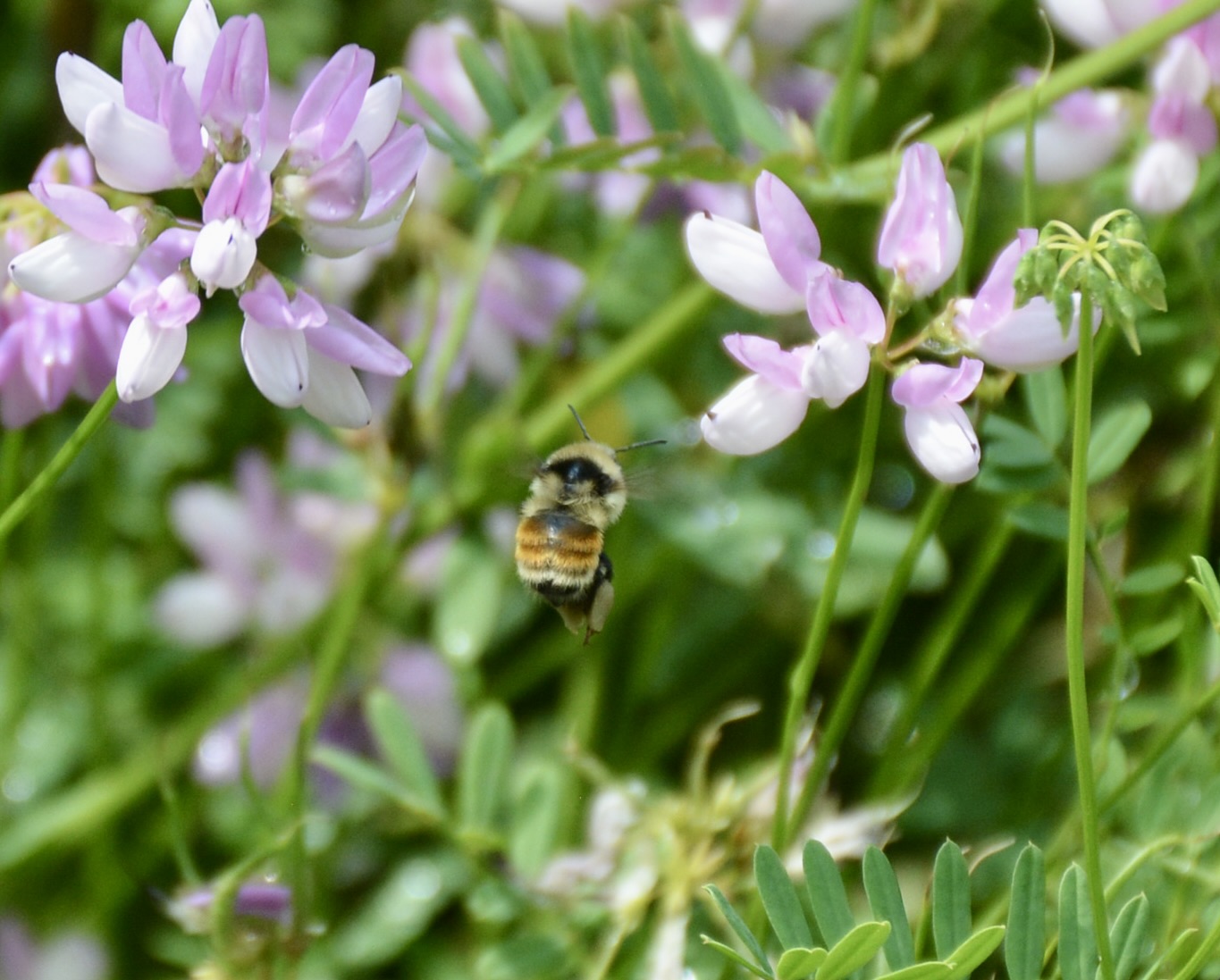
Yesterday was a lovely day. We had a variety of tasks we wanted to accomplish. Susan planned to connect with her sisters on a video chat. I wanted to trim some weeds around the beehives at the farm. We wanted to do a bit of back-to-school shopping with our grandchildren. We planned a family dinner. Since we were traveling for the last couple of weeks, it would be good to sit at the table and reconnect. And we needed to do the usual chores of getting ready for Sunday. I’m preaching this morning at an island church near our home. I’m out of the routine of preaching. When I was preaching regularly, we avoided having too many plans on Saturdays so that I could spend some time thinking about my sermon and preparing for the Sunday activities.
Things didn’t go quite as we expected. On my way to the farm, I had a flat tire on my bicycle. I carry a tire pump and a patch kit. I even carry a spare inner tube. However, I have found that it takes quite a bit of time to repair a tire alongside the road. I called for help, and our son came and picked me and the bicycle up and gave me a ride home. As a result, I missed out on the planned bicycle trip to and from the farm. I had only ridden about 3 miles of the 15 I had planned. The adventure also took enough time that I still haven’t trimmed the weeds at the farm. That will have to wait until tomorrow.
We met as planned for lunch and school shopping, and there was time to prepare a family dinner. I fixed the flat tire on the bicycle. I went to a farm stand near our house for fresh sweet corn, and we had a dinner of chicken, potatoes, corn, and fresh fruit salad. In addition to the fruit we brought home from our trip, I had picked pears in our son’s orchard in the morning. The pears are really plentiful and very good this year. I also added a few berries from our freezer, which we had picked earlier.
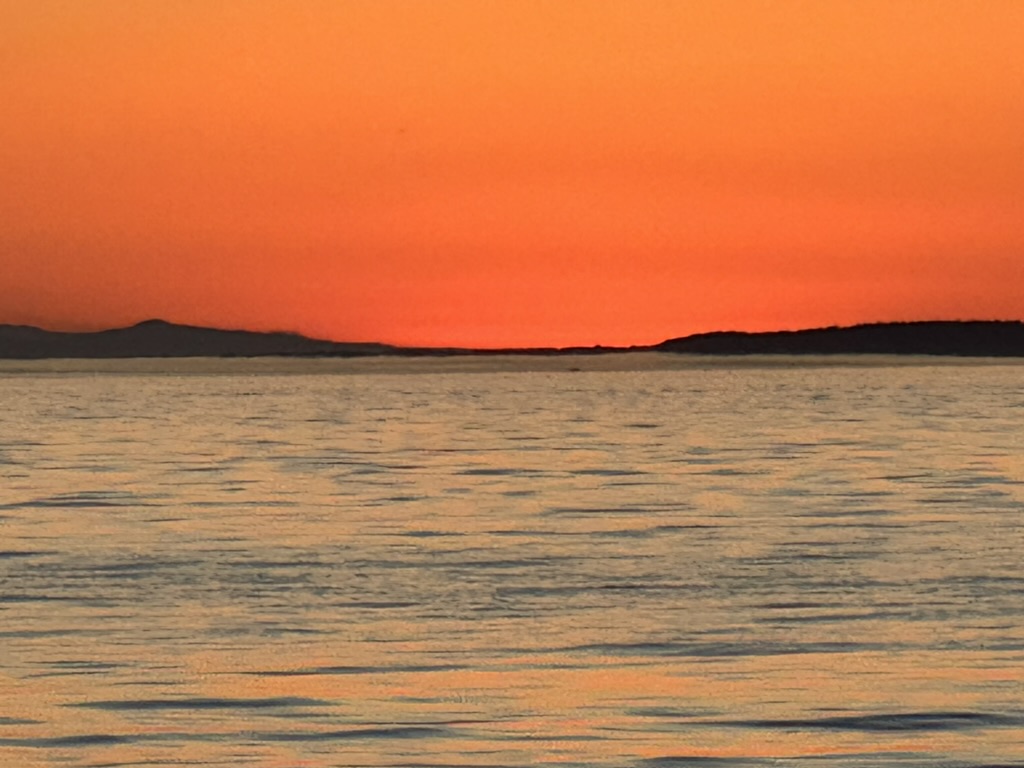
With all of the activity, we got to the end of the day, and at 8 pm, we had not yet taken our daily walk. We put on our shoes and headed out, knowing that it was nearly time for sunset. We arrived at the beach just as the sun slipped below the horizon. There is smoke in the air from wildfires in British Columbia, so the sunset was bright orange. The sky was almost cloudless, with just a few clouds to reflect the color. We sat on a log and watched for a few minutes. It was an unexpected treat at the end of our day.
Although we often seek routine, our lives are enriched by surprise. Sometimes shaking up the routine, even an act as simple as changing the time of day we go for a walk, can give us unexpected pleasure. There is something profound within us that drives us to explore new activities and new places. Brain scientists teach that when something positively surprises us, we receive a surge in dopamine that we experience as pleasure. This experience keeps us seeking new adventures and drives us to explore.
Children are natural explorers. They enjoy mixing things up and trying new ways of play. Our youngest grandson likes to go down the slide at the playground. At first, he might go up and down several times. Then he’ll mix it up, trying to climb up the slide instead of going down. It is something that all of his siblings have done. He is seeking a new adventure. Children are constantly inventing new and creative ways to play.
I enjoy stepping outside of my comfort zone, taking a path where I don’t know how it is going to turn out. Sometimes my urge to explore means a bit of discomfort. When I realized I had a flat tire on my bike several miles from home, I was uncertain about how to handle the challenge. I could have repaired the tire on the side of the road. I could have locked the bike and walked home to get my truck. I decided to use my cell phone to ask for help, and help arrived quickly. Once I got the bike home, I could have taken it to the bike shop to have the tire repaired, but I was curious about what had happened, and I had the tools and equipment to fix it myself. In addition, there was another hit of dopamine and a surge of pleasure when I finished the task, feeling proud that I know how to make the repair correctly.
At my age, the urge to explore is unlikely to lead me to some of the huge adventures I have imagined. I’m probably not going to kayak from Alaska to Russia. I’m unlikely to climb the highest peak on each continent. I don’t plan to spend weeks skiing across Antarctica. However, I know that there are simple ways to explore, adventure, and experiment. I know how to step out of my comfort zone. I am more careful about weighing risk and reward than I was when I was younger, but there are still many reasons to take risks.
All humans have limits. Knowing our limits and realizing our boundaries is essential to fulfillment in life. Unnecessary risk is to be avoided. I don’t want to incur major injury. I may invest more time in planning, but I hope I never lose my sense of adventure. I hope I never stop exploring. I know that I can find joy in changes of plans and at times when things don’t work out. Even when those things happen, I don’t regret trying.
Talking about the weather
It was, however, a taste of things to come. It isn’t accurate to say that fall is in the air, but it was a slight shift from the way it has been.
Nonetheless, the news is that we are under a heat dome. It isn’t very dramatic. The high temperature yesterday was 82. The forecast high for today will be 87. Sunday is also supposed to be warm with a high of 86. Overnight lows will be in the high 50s. Weather forecasters say that some inland locations may reach above 100 degrees. More notable than the temperature is that it has been dry here, with very little rain.
The weather here is mild. We don’t see the kinds of temperature extremes that we experienced in other places where we have lived. It has been three years since the temperature topped 90 degrees. Back in June of 2021, there were three days of temperatures in the upper 90s. That heat dome was blamed for the death of a woman in Bellingham.
We also don’t see the cold temperatures that have been common in other places where we have lived. It gets below freezing in the winter, but we haven’t experienced any temperatures below zero in the five years we’ve lived in the area. The first winter we lived in this house, there were several days with lows in the teens, and as a result, most houses experienced some frozen pipes.
The problem isn’t extreme weather where we live. The people who live here aren’t set up to deal with the weather we have. Like the rest of the world, we are experiencing unusual weather events. Global climate change will continue to yield some days that are hotter, colder, wetter, and drier than previous extremes. We will likely set some new records. There is nothing new in that, either. Every other location where we have lived experienced both record highs and lows during our time there.
We lived in southwestern North Dakota, where we experienced temperatures colder than 30 degrees below zero and hotter than 100 degrees, and annual rainfall between 13 and 20 inches a year. We saw some individual rainstorms that brought more than an inch of rain, but also experienced 5 months with no significant precipitation. Each time the weather was extreme, the locals always assured us that it was unusual. We joked that whatever the weather, the locals would say, “It usually isn’t like this.”
My father-in-law used to comment, “It’s a good thing we have weather. Otherwise, we wouldn’t have anything to talk about.” However, he also knew that it was important to talk about the weather. Farmers and ranchers are dependent upon the weather for their livelihood. An extended drought can lead to crop failures, stress animals, and result in decreased feed. Extreme blizzards can result in the death of livestock. Weather is serious business.
Most of the world will see more temperature extremes as a result of global warming. There are already climate refugees in the world who have been forced to leave their homes by drought and extreme temperatures. We have met some new residents of our town who moved in part due to the high temperatures they experienced in Texas and Arizona. We expect to see more climate refugees in our area in the years to come.
Two of the three parishes we served in our careers as pastors added air conditioning to the church buildings during our tenure. Before those times, air conditioning was not needed. We learned to open windows at night, to use fans to circulate air, and other techniques to make the buildings comfortable for worshipers. The church we belong to here does not have air conditioning, but there has been talk of installing it. The conversation is familiar to us. More and more public buildings are having air conditioning installed. There is a need in communities to have shelters in case of extreme heat events. Because our church has a basement under the entire building, it could serve as a heat shelter even without air conditioning.
We will continue to talk about the weather even though we live in a place where the weather is mild and extreme weather events are uncommon.
Meanwhile, I have sweatshirts for cool mornings and ceiling fans for warm evenings. I’m not suffering. And although I enjoy rural living and generally avoid crowds, I know that we will need to share our mild climate with others in the years to come.
Detours
Before we moved to the northwest, we discovered Leavenworth, stopping at a couple of different campgrounds with our camper as we headed west to visit our son and his family. Stopping in Leavenworth made the last day of our journey short so we could arrive early the next day. Our visits brought us familiarity with the area. We have favorite places to eat and a few shops that we enjoy visiting.
We stopped in Leavenworth on Wednesday evening and enjoyed a walk through Riverfront Park, a natural area on the Wenatchee River where eagles and ospreys are often seen. Folks were tubing in the gentle section of the river and enjoying the warm day.
US Highway 2 heads west out of Leavenworth, following the Wenatchee River through a narrow canyon. The road is winding and travel is slow as it climbs to Stevens Pass at the top of the Cascades before descending into Everett. This summer, there has been a significant construction project to resurface the highway. Because of the tight canyon, the road has to be closed during the day with a detour re-routing traffic around the construction area. We began our day yesterday with a lovely drive on the Chumstick highway to the town of Plain. We followed Beaver Valley Road, winding our way back to US 2 past the construction area. Not being in a hurry, we enjoyed the detour.
It was the second major detour of our trip. On our way east, we encountered a section of Interstate 90 that was closed southwest of Spokane. There had been a series of accidents on the Interstate that forced closure. The detour took the heavy traffic through backroads around the area of the accident investigation. On that detour, we got to see some small towns that we otherwise would not have visited.
If our only interest had been getting from one place to another as quickly as possible, we would have found both detours to be nuisances. They slowed us down. They took extra time. They caused us to change our plans. However, we were on vacation. We had extra time, and in both cases, we appreciated the opportunity to slow down and take a look at some new stretches of roads.
I have a friend who calls such adventures “off-turnpike routes.” Although I rarely refer to Interstate as a “turnpike,” I know exactly what he means. We frequently select routes on backroads rather than following the Interstate. We discovered Leavenworth because we were traveling on US Highway 2 as an alternate route from Interstate 90, which crosses the Cascades south of US 2 and carries a lot more traffic. The two-lane roads have slower speed limits. Sometimes slowing down is just the right mood for the way we like to travel.
Life frequently offers detours. We head out in one direction and end up going in another. The work of a pastor often involves changing plans and heading out in new directions. For years, I had a small note posted above my desk reminding me that “the interruption is my job.” It seemed like every time I set aside a day to do writing and other office work, I would be called away from the office to attend to an emergency. I learned not only to deal with interruptions, but to enjoy them.
When our children were growing up, we sometimes referred to the routes I selected as “long cuts.” Instead of finding a shorter route, I seemed to be skilled at finding longer routes that took more time. I liked to find places that are off the beaten path. The reward for our children often was ice cream or another snack that we might have missed had we stuck to the most direct route.
I’m sure other drivers found the detours to be challenging. They had places to go and things to do, and slowing down was not in their plans. However, we found both detours to be opportunities to explore.
I plan to seek out more detours in future travels.
Supersized everything
It isn’t just televisions, of course. Sometimes it seems as if everything from furniture to pickup trucks keeps getting bigger and bigger. The last time we traded pickups, the new one was nearly a foot taller than the one it replaced.
Even our food is getting bigger. We visited two of our favorite fruit stands yesterday and purchased apricots, plums, peaches, and apples. It wasn’t long ago that I could find reasonably sized apples in the fruit stands, even though the grocery store seemed to stock only large apples. Now the fruit stands are also filled with apples larger than a softball. I looked for baseball-sized apples, but was disappointed. It seems that the rest of the fruit-buying public prefers large apples.
We didn’t buy onions yesterday, but we could have purchased Washington sweet Vidalia onions that were the size of a cabbage. I like Vidalia onions, but I’m pretty sure that they were developed in the south. Decades ago, when we lived in Idaho, which is somewhat famous not only for potatoes, but also for onions, yellow onions were the most common variety grown. They were good, and we enjoyed purchasing them at discount prices because we lived close to where they were grown. There are a lot of onions grown in Washington, and I guess that some of the farmers have switched to Vidalia onions. It makes sense. They are a tasty variety, and the rich volcanic soil supports root crops. But the size! What is the purpose of an onion that is so large it must be cut into quarters or smaller pieces for each use? When a recipe calls for an onion finely chopped, it doesn’t mean one of these. Perhaps a softball-sized onion would do, but a smaller one is closer to the amount of onion needed for most recipes. One of the onions we saw yesterday in the stands would make enough caramelized onions for a party of a dozen or more people.
Not everything is better when it is bigger.
For what it is worth, the plums, apricots, and peaches were standard sizes yesterday. That is good because we, too, have upsized a bit and don’t need to increase the size of our food portions continually. As we grow older, we find that we often need less food than is typically offered in restaurants. Lunch yesterday was the other half of the sandwiches we purchased for lunch the day before. We have a small cooler in which we carry the extra food for the next day. It still has leftover potatoes from dinner portions that were too large for us.
When we lived in Idaho, I used to joke that the state slogan, “Famous Potatoes,” wasn’t “Good Potatoes,” or “Tasty Potatoes.” Idaho potatoes are just famous. We had moved from North Dakota, where I found Red River russets to be delicious potatoes. The soil of southwest Idaho did, however, produce huge potatoes. We could generally find potatoes that were a pound or more, which I consider to be very large. However, some potatoes were as large as five or even 10 pounds in some of the local stores. We liked to purchase one of those huge potatoes as a gag gift for visitors and tell them, as we presented it, that it was a little cull that we had gleaned from a nearby field.
I’m happy with an 8 to 10-ounce potato with my dinner. I don’t need anything bigger. When it comes to certain foods, such as potatoes, apples, or onions, I don’t see the reason to have a single fruit that is larger than a reasonable portion. Most of us aren’t feeding large groups when we prepare food. Fruits that are a single portion make sense. As delighted as I am to have new crop apples to take home, it is a bit disappointing that many of them are so large that they will be cut in half, with one half stored in the refrigerator for a second portion. While an apple a day might keep the doctor away, twice as much apple don’t seem to have increased health benefits.
The current trend makes me wonder what the future holds. Will our grandchildren go to the fruit stand to discover apples the size of watermelons? Then again, that might be a good thing because we did notice that the fruit stands had quite a few watermelons that were much smaller than the ones that used to be common. While other fruits are getting bigger, there are smaller watermelon choices.
We have had a wonderful trip, and today we will take our fruit for a short, but breathtaking drive over the Cascade mountain to our home. We’ll eat fresh fruit, preserve some for the winter, and share some with family and friends. And we’ll recall other trips to the orchards and anticipate future trips. Who knows what we will find?
Stopping for fruit
After flowing north for a significant distance in British Columbia, the Columbia River enters the United States in northeastern Washington. It flows through eastern and central Washington, taking a curving route next to the Cascades between Wenatchee and Yakima before turning West and forming the border between Washington and Oregon. This winding path through Washington offers water for irrigation. The unique weather of the Cascade Mountains makes the area around Wenatchee a perfect place to raise apples.
We’ve been traveling through the area for many years since our son and daughter-in-law moved to western Washington. Now that we live in the Pacific Northwest, we have our favorite fruit stands.
One of the things that has changed significantly since we first visited the fruit country of the east slope of the Cascades is the varieties of apples grown. When you think of apples, the Macintosh comes to mind as an iconic red apple. It has thick skin and travels well, which is why the variety was so popular among grocers. The tough skin also makes the variety suitable for baking, though many prefer a tart apple, such as the green Granny Smith, for baking.
For many years, my preferred variety for eating was the Gala. It travels well and keeps fresh for a long time. I can purchase a case, and as long as I keep them cool, they last well until we have eaten them all. Then Honey Crisps made their debut, and sometimes I find a good buy on a case of them. This year I’ll be looking at some of he newer varieties such as the SweeTango and Cosmic Crisps. The newer varieties are often more challenging to grow and produce less fruit per acre, resulting in higher prices, but I’m willing to pay for good apples.
Our son’s orchard on the other side of the Cascades produces lots of Golden Delicious apples so that we won’t be purchasing any of that variety.
When I go into the fruit stands, it is no longer a case of looking at the boxes of apples and selecting the ones with the best price. I have learned a bit about different varieties and am more adventurous in my selection of fruit. It is a sign of the abundance of fruit close to our home. We are fortunate to live in an area with excellent access to fruit. The bounty of the earth continues to surprise and delight us.
I know very little about growing apples, but altitude, temperature, day length, and access to water are all factors in a complex process. Fruit growers have to become experts in pollination, diseases, and pests.
It is not just apples that we will be seeking, however. The Wenatchee area produces a wide variety of peaches. We generally are looking for traditional round fruit rather than flat doughnut peaches. Frost, Red Haven, and Contender are the most common, with a list of additional varieties grown by various orchards in the area.
Fruit varieties are now frequently patented. How would the vast array of varieties and the complexities of marketing seem to Johnny Appleseed? Johnny Appleseed stories are based on the real life of John Chapman, who traveled throughout what was then known as the West planting apple trees. He never traveled as far as the Mississippi River. He established nurseries in Pennsylvania, Ohio, West Virginia, Indiana, and Illinois. His vision was to plant so many apple seeds and grow so many trees so that no one would go hungry. His vision was expanded and became a reality as the heartland of the United States became a place of agricultural production that feeds the world. Not all of that production, however, has been gentle on the land. Modern agriculture has a massive carbon footprint. Fossil fuels are consumed by machinery and in the production of fertilizers. Huge farms are not always as wise about soil stewardship as they were when most farms were small family operations.
I’ve been told that individuals can do more to reduce climate impact by their choices of food than by their choices of automobiles. Much of the food that is sold in modern supermarkets has traveled long distances. Many foods are produced on farms that are geared to short-term profits. Producing and consuming food can be a form of extraction.
As we shop for fruit, we are also learning about how it is produced. Smaller fruit stands located close to the orchards are sources not only of local fruit, but also of information about how it is grown. As we seek to be responsible consumers, we are learning about the food we eat.
Our fruit buying comes at the end of a delightful trip that has taken us across five states. For the most part, we have traveled routes that are familiar to us. There have been other trips, and there will be future trips where we explore new areas. This summer, however, our travels have brought us wonderful times with friends and family. Now our trip offers us the opportunity to pick up some delicious food for our family. We are indeed blessed.
Family
“Do not press me to leave you,
to turn back from following you!
Where you go, I will go;
where you lodge, I will lodge;
your people shall be my people
and your God my God.
Where you die, I will die,
and there will I be buried.
May the Lord do thus to me,
and more as well,
if even death parts me from you!”
—Ruth 1 NRSVUE
I grew up in a wonderfully blended family. Our parents adopted two girls, had one born to them, then had two sons and adopted two more sons. Three girls nd four boys. I’m the middle child, the first son born to them, and the oldest of the boys. It is more complex than that, but there was an important idea that is deeply ingrained in me, stemming from my upbringing. The idea did not begin with me or with my generation. It is a deep and essential part of the story of our people. The famous promise of /ruth, often read at weddings, is not a statement of romantic love, but an expression of the devotion of a woman to her mother-in-law after her husband has died and they both become widows without many prospects in the world. Over time, Ruth marries Boaz and has a son, through whom her mother-in-law could restore her property rights. That son was named Obed. He became the father of Jesse, who became the father of David, the king. Ruth, who was not of our people but rather an outsider, became a name in the genealogies of our people.
It is a basic tenet of our faith that family relationships reach beyond genetics. This coincides with my experience that family is not merely a matter of shared genetics. The children in our family who were adopted were every bit as much a part of the family as those who were born to it.
Given my upbringing and my convictions, it seems perfectly natural to me that we have two children. One was born into our family. The other was adopted into our family. We are all related, although we do not all share the same genetic material.
For a few days, we have been visiting dear friends in South Dakota. None of my brothers or sisters, children, aunts, uncles, or cousins lives in South Dakota. But some people live there who are family as surely as if we had been born to the same parents. We have thirty years of shared experiences. We have been together when family members have been born and others have died. We have shared weddings, baptisms, and funerals. We have eaten meals together and walked together through the extraordinary beauty of special places. We know their stores and they know ours. We are family.
In some Christian traditions, all of the members of a congregation consider themselves to be siblings in the family of God. In some congregations, it is common to address other members of the community as brother or sister. I was not raised in this particular tradition. It feels out of place for me to address another member of the congregation as Brother this or Sister that. Nonetheless, some members of the congregations I have served feel like siblings to me. I could easily address some of them as a sister or a brother.
We are family
I got all my sisters with me
We are family
Get up, everybody, and sing
We are family
I got all my sisters with me
We are family
Get up, everybody, and sing
-Sister Sledge
For some members of indigenous tribes that have lived on this continent since time immemorial, it is not just people who are seen as siblings. The Lakota concept of Mitakuye Oyasin can be translated as “All My Relatives,” or “We Are All Related.” It applies to people and all living things. It applies to plants and also to inanimate objects. The rocks, stones, and soil are relatives of ours. The trees and water and resources of the earth are our relatives. We are all related. We are family.
The mapping of the human genome has led to several options for genetic testing. There are commercial companies that offer various services, including DNA tests that give information about ancestry. Such tests have been used to identify national and ethnic origins as well as trace ancestry and, in some cases, discover new family connections. Recently, I have had conversations with a sister who is interested in exploring her roots. Since she and I share the same biological parents, her results would be similar to mine if I had such a test. While she is free to make her own choice about testing, I have no interest in having a DNA test. I am not particularly interested in knowing her results.
DNA testing can never tell the entire story. It can never fully reveal all of an individual’s family. Shared DNA is only one way of being family. DNA doesn’t reveal the intricacies of adoptions and chosen relationships. It doesn’t show the closeness of couples without children. It doesn’t tell the story of community connections that are as strong as shared biology. I trace my family through bonds of love that are as vital and meaningful as shared DNA. I choose to reach beyond genetics to embrace a broader definition of family. Our people have been doing so for many generations. Biblical genealogies trace relationships that go beyond shared DNA.
I am grateful that I am nurtured by a family that is blessed with beloveds who have come through adoption. I am fortunate to have friends who have become family, and I will continue to nurture all of my family ties.
Heading home
The actual event took place just before midnight. I remember the date because it was rare for our family to be up in the middle of the night, and I remember that my father was on the telephone making arrangements for flights that he would take the next day. I remember the date because it was my sister’s birthday. I remember the year because she turned eight that year, and I had just turned six. My new red bicycle was one of my most prized possessions that summer.
The earthquake resulted in a massive landslide that blocked the flow of the Madison River and created Quake Lake. People died in the landslide, and the rising water in the new lake was threatening to reach levels where it would cause extensive damage and destruction if allowed to build up and flood downstream. Within a few days, engineers devised a plan to create a new spillway to allow the river to resume its normal flow. I wasn’t aware of the details, but I remember being shown the many photographs that were taken from my father’s airplane of the landslide and the newly formed lake.
Our friends remembered the earthquake, but they didn’t remember the date. We were able to recall a significant event and know where we were at the time. It was a connecting point in our stories, even though we didn’t meet each other until many years later.
There are other dates that I remember that don’t make that kind of connection. People my age connect by telling stories of where we were on certain specific dates. November 22, 1963. I was ten years old. I came home from school for lunch and learned that President Kennedy had been assigned. Most folks my age can remember where they were and what they were doing when they learned the news.
The things we recall could easily be used to tell how old we are. There are lots of other ways. The color of my hair and the lack of hair on the top of my head are pretty good indicators of age. My clumsiness when I operate my cell phone might be another indicator to a young person that I am not of their generation. I watch folks typing rapidly on their phones with two thumbs and know that it is a skill I will probably never muster. I awkwardly type on my phone using a single index finger, and my fingers don’t know the location of the letters. I have to stare at the phone, and even then, I make mistakes. Of course, unlike younger people, I compose text messages in complete sentences and carefully add punctuation. I rarely use emojis, and when I do, they are added as an afterthought.
There are a few downsides to being my age. My fingers are slow on the phone in part because a bit of arthritis has resulted in swollen knuckles. Both of my thumbs have had trigger release procedures, and they don’t move as freely as they once did. And although I have a good memory of certain events, there are gaps in my memory. There are times when it takes me some time to sort through my memories. There are many things that I have forgotten. Sometimes I cannot put a name to a familiar face. Sometimes the flow of conversation is interrupted because I can’t think of a detail.
Still, I am content with my age. I don’t mind being seen as old by others. One doesn’t have to be very old for young children to think of you as aged. People in their thirties think of me as a member of their grandparents' generation. Yesterday, I was content to sit in the pews as others led worship, content with being a retired former pastor. People ask me how I am, and I can honestly give a positive response. I am well. The usual aches and pains of aging do not limit my activities. I am content with my place in life.
Days like yesterday bring me joy. Visiting the church we served until five years ago feels like a homecoming. There were lots of familiar faces, lots of heartfelt greetings, lots of hugs. Visiting with dear friends brings to mind important events we have shared. I look at a face and recall a funeral, a wedding, a baptism, or another significant event in the life of the person I am greeting. There can be a lot of memories in a handshake or a hug. The decades have given me experience in saying hello and goodbye.
Today we will once again head west. We’ll be traveling on familiar roads. We’ve made this trip many times before. Some days we travel at a slower pace than once was the case, but we still are up for a road trip and putting a few miles behind us. We have lots to look forward to in our travels. As I write this morning, it feels like I have more than one home. Being in the hills is a homecoming. Leaving them feels like heading home. That, too, is one of the blessings of growing older.
Return to worship
A lot is going on in Rapid City. The Central States Fair is in full swing with carnival rides, animal displays, entertainers, and more. This is the last weekend before the start of a new school year, so some families are heading to the hills to enjoy the last weekend of camping and recreation before another school year. Other families are heading to town to shop for school clothes and supplies. Years ago, when we were pastors serving a congregation in Rapid City, a late August Sunday would likely mean light attendance at worship, with families finding a lot of other activities that attracted them.
We will worship with the congregation this morning. It has been five years since we retired, and it has taken us that long to adjust to what retirement means. We returned to Rapid City and worshiped with the congregation a little more than a year after we retired. The timing of our retirement meant a strange transition for us. In the spring of 2000, with the pandemic in full swing and people uncertain about what the future held, the decision was made to suspend worship. Health officials were warning against any public gatherings. People were wearing masks whenever they left their homes, and it was feared that gathering for in-person worship might become an event that spread the illness. I was reluctant to stop in-person worship. Worship is the heart of a congregation, and I have invested my career in crafting meaningful worship. I had shared every Sunday worship with the Rapid City Congregation for twenty-five years. In my mind, stopping worshipping was not an option. So we went online. In a single week, I learned how to record and livestream worship on social media. I figured out how to upload the services to YouTube and make a link from the church’s website to its YouTube channel.
And then it was time for our retirement. We set up a stage at the front door of the church and held a worship service in the parking lot. People could listen to the service in their cars. There was a drive-by greeting at the end of the service. We packed up our household over the summer and moved to northwest Washington. A year later, we decided to take a retirement trip and pulled our camp trailer across the nation to visit our daughter in South Carolina. We stopped in Rapid City on that trip and had a face-to-face worship opportunity with the congregation. They hosted a farewell for us with a special cake and reception following worship.
We haven’t been back since. It is part of the way that professional ethics work in our denomination. When a congregation no longer employs pastors, they stay away and allow that congregation to choose the leadership that will follow without influence from the former pastor. The new pastor moves into the congregation and serves without the former pastor meddling.
After that quick visit to the congregation, we went to work for a congregation in Bellingham, Washington, where we served as Interim Ministers of Faith Formation for two years before becoming fully retired.
Time passes. Things change. The congregation with which we will worship this morning is not the same one we left. Members have come to the end of their lives and have been laid to rest. New members have come. New leadership has brought a new style to worship. The building is receiving major work. Walls have been painted, programs have changed.
We, however, are not returning to visit a building, even though that building is filled with memories for us. We are returning to see people. We have a lot of friends who are part of that congregation. We care about them and the events of their lives. There are familiar faces that I long to see.
There was a time when the congregation was the center of our lives, and our leadership was central to the church. Now we are part of the history of the place. Our story belongs to the past. For those who have joined since we retired, our visit will not carry much significance. For others, our visit will spark memories. We’ll be in the pews for one service, and then we’ll be on the road back to our home in Washington. However, memories and history are essential.
When I was pastor of the congregation, I often arrived at the church early on Sunday mornings. I would go into the sanctuary before anyone else arrived. I would sit in the pews and go through my plan for worship, thinking about the people who would come and how they might receive my words. I know from that experience that part of the sacredness of that sanctuary is the memory with which it is infused. It is the place of baptisms, weddings, funerals, and confirmations of generations of church members. And it was home to a congregation that had accumulated a substantial history before moving into that building. The stories of the church flood back each time I visit that room. The people we meet will spark memories of others we miss. Our community is much broader than one place and much longer than one moment.
Life goes on. The future comes. Our time is short, but we are part of the ongoing story of the ministry of Jesus Christ in Rapid City. It will be a day of thanksgiving for us, a time of memory to be sure. But it will also be a time of hope. God is still speaking.
Sacred places
Whenever we visit dear friends, our conversation includes remembering other friends who have passed away. One of the things we share is respect and admiration for some incredible people. We say the names of those we have known, and we tell stories of those who have gone before us. One of the reasons we travel is that community transcends space. We continue to belong to people who are in different places. When we go to those places, we remember others who have lived and died. Our community transcends time. We belong to a people who have gone before us, and we belong to those who will come after us.
The Black Hills of South Dakota are familiar to us. We lived here for 25 years. We loved showing them to guests and visitors. When friends from distant places visited, we drove them around the hills so they could see the natural beauty of the place. Now that we have moved to another place, we become the guests as we revisit places we know and see things from a new perspective. Since time immemorial, people have come to this place for rest and renewal. The hills are sacred not only to the Lakota, but to dozens of indigenous plains tribes. We, who have had the privilege of living in this sacred place, are shaped by the holy ground upon which we have stood.
Yesterday we took a drive around some of the southern hills. We began our tour with a visit to the Remembering the Children memorial site. It has been created to protect, honor, and remember the children who died at the Rapid City Boarding School. There are dark moments in our history. Led by indigenous tribal members, the community has worked together to preserve the truth of what happened at the site. Sculptor Dale Lamphere worked with ideas from survivors and children to create a powerful sculpture for the memorial. We had to view it from a respectful distance because the monument is temporarily closed as the complex network of tribal, city, state, and private land ownership is navigated to develop and preserve the site properly.
Later, we walked among the rock pinnacle formations known as Cathedral Spires. Some people climb to the top of the rocks, but we have been content to walk around and among them, viewing their grandeur from the paths. The ancient stones have inspired people for tens of thousands of years and will continue to invoke awe and wonder from visitors for generations yet to come. Walking among them is a reminder that our time is but a brief moment in the story of this place. That moment, however, is significant. In that moment, we realize the importance of caring for this land, and we also recognize the importance of keeping this land accessible to all. Custer State Park was established because people understood that these places should remain in public control. There are places where private ownership is appropriate. However, the establishment and continued maintenance of the park is an acknowledgement that some lands must remain public and accessible to all.
The park continues to change. We stopped at a new visitor center that we had not seen when we lived in the hills. It contains well-done displays of the creatures and sights of the park. Funds from public and private sources have been combined to create a legacy for future generations of park visitors.
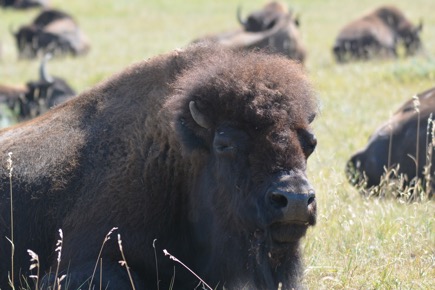
The bison, however, survive. Starting with a small remnant herd in the 1930s, the park has managed and nurtured the free-roaming bison into a substantial herd. Through careful management, including an annual roundup, so that the health of the herd can be assessed and vaccinations given to protect them. There is also a yearly auction to control the size of the herd to levels that can be sustained within the park.
The rocks and animals of Custer State Park stand as reminders of the past we have inherited and the sacred lands and animals that we must preserve for future generations.
One of the Lakota words that we learned in our years of living in the hills is “Takini.” The word might be translated, “survivor,” though a more precise translation would be “barely surviving.” It is the name of the place alongside the Cheyenne River where the survivors of the Wounded Knee massacre stopped in exhaustion on their journey north in search of support from relatives at Green Grass and Standing Rock. Our friend Matt Iron Hawk once told me, after a long silent pause, that Takini means “We’re still here.”
Despite the ravages of time and the cruelty of human systems, the sacred remains. The rocks are still here. The bison are still here. And the people are still here. Indigenous and settler people have shaped the history of the hills and remain the reason we have returned and will return again.
These hills are indeed sacred, infused with the memory of those who have gone before. We have been privileged to know some incredible and influential people. We have inherited the whole history of our people, both good and bad. And we are still here. But we are here only for a little while. These hills do not belong to us. They belong to the future. May the things we do while we are here leave a lasting legacy for those who will follow.
Dinosaurs

I especially enjoyed coming to my office early in the morning for a telephone call to the national offices of the United Church of Christ, located in Cleveland, Ohio, two time zones to the east. I would describe my setting to my colleagues. “I’m sitting in my office looking outside. Outside my window, wild turkeys are feeding on the crab apples from the tree in the churchyard. I can also see deer grazing on the hillside above the church, and on the skyline, there is a giant dinosaur.” My family laughed and said that they thought I was telling the truth until I got to the part about the dinosaur. I replied that my description was accurate and invited them to come to visit and take a look for themselves.
The dinosaur on the skyline in clear view of my office might be called a statue or a sculpture. It is made of concrete and painted green, one of four such creations crafted to be the size and shape of actual dinosaurs, based on fossil and footprint discoveries in the area in the 1920s and 1930s. During the Great Depression, the structures were built in an attempt to attract tourists to the town. Knowledge of dinosaurs was incomplete, and the largest dinosaur, most easily seen from my office, was labeled a brontosaurus. There are some questions about whether the fossils upon which it was based were from Brontosaurus or another dinosaur, the similar Apatosaurus. The green and white coloring of the sculptures is probably more a product of the designers' imagination than historical accuracy.
One of the treasured features of Dinosaur Park in Rapid City is that visitors are allowed to climb on the sculptures. Children especially enjoy the stegosaurus with its distinctive spikes and dermal plates. The creature’s unique shape makes a kind of slide.
In the five years since I retired and moved out of that office, Dinosaur Park has received new walking paths, benches, and interpretive signs. Having heard about the improvements, we paid the park a brief visit yesterday. I was feeling a bit nostalgic as I looked down on the church building that had been my workplace for more than half of my career. The distinctive roofline and iconic white outdoor cross fit neatly into the view from the hill. I remembered looking out from my office at the church to see the hill above.
The improvements at the park are well done, and we appreciated the effort that was invested to make the park more accessible to people and to offer a bit of historical context, as well as update some of the information about the particular fossils and footprints that inspired the park.
Life goes on. Things change. The leadership of the church has moved to a new generation. The congregation is not as large as the one for which the building was constructed. But for now, the dinosaurs remain. I hope the pastor who now occupies the office enjoys the view as much as I did. I hope that from time to time she describes the view to her colleagues. When they come to visit, the park will welcome adults and children alike and inspire wonder and joy.
Homecoming
ever they’re calling me
I sit and dream
and then I seem
once more all their beauty to see.
The wind whispers through the pine tree
The bird sings its sweet refrain.
Out there friends are true
and heartaches are few.
Take me back to the Black Hills again.
I don’t know who wrote those words or the source of the tune to which we used to sing them. I learned the song at meetings of the Rapid City downtown Kiwanis club. When I tried to check the source of the song, I found a different song by Doris Day for the movie Calamity Jane. These lyrics, however, were in my mind as we drove into the hills yesterday. Our GPS was turned off. I didn’t need directions to follow the familiar roads. And the Black Hills greeted us with a typical Black Hills summer thunderstorm, complete with high winds and driving rain. There was no hail, however, which can be a factor. The summer that we moved from the Hills, we got caught out in the hail with both of our vehicles requiring a trip to the body shop.
Our hosts were ready for us with a space in their shop, so our car was protected in case of hail.
It is a homecoming for us. We lived in the Black Hills for 25 years. It was he longest we lived in any place in our lives. That fact sounds like we are nomads, but that isn’t the case. It is just that our education and careers led us to move several times. When we moved to South Dakota, we had completed ten years serving a congregation in Boise, Idaho. Before that, we had served two congregations in North Dakota for seven years. I hoped that we would stay in Rapid City for at least seven years so that both of our children could graduate from high school before we had to move again. I thought that about ten years might be right and leave me at a good age to become a Conference Minister or perhaps serve a larger congregation. I considered both possibilities, but in the end, we served our Rapid City congregation for 25 years until our retirement.
There were several factors involved in our decision to sell our home and move when we retired. Professional ethics require that we not exert influence on the future leadership of the congregation and that we separate ourselves from its leadership and decision-making. This could be best served by our moving out of the area and allowing the congregation to seek new leadership. Equally important to us was our desire to live near one of our children. We are happy with our decision to move to the Pacific Northwest and are enjoying living on the coast with our son and his family just a couple of miles down the road.
But we miss the Black Hills. We miss the people we had grown to love. We miss the meaningful work that we had serving the congregation in Rapid City. Five years have passed, and driving into the hills feels like coming home.
It might have felt different to us had we come a week earlier amid the thunder of 500,000 motorcycle riders celebrating the 85th anniversary of the Sturgis Motorcycle Rally. Some years, when we lived in the hills, we would plan to be away during the rally. It isn’t that we didn’t enjoy the guests who came to the hills. We have always known that the hills need to be shared with others. Even though we owned a home on a half-acre lot, we were aware of the history of this place. It was sacred to the Lakota people and other tribes who did not have a concept of ownership of the land before contact with European settlers. The land belongs to the Creator, and we humans occupy it only temporarily. When we lived in the hills, we learned to welcome guests and share the treasures of beautiful land, temperate weather, and good people.
The primary focus of the next few days will be visiting people. However, I’m sure that we will also see some of the places that we enjoyed when we lived in the hills. I’ll probably drive by the home we used to own and go out to Sheridan Lake, where I paddled countless mornings. We may take a drive through Custer State Park and view the progress of the Crazy Horse mountain carving. We don’t have a complete itinerary for our visit. For now, just having come to this place is enough.
I am a poor wayfaring stranger A-trav'ling through this land of woe. And there's no sickness, toil or danger In that bright world to which I go. I'm going home to see my father (mother, sister, brother etc.) I'm going there no more to roam; I'm just a-going over Jordan I'm just a-going over home.
There are people for whom a particular place is home. Even those who do not travel and who stay in the same place for their entire lives are, in a sense, just passing through. As the Psalmist declares, “Lord, you have been our dwelling place in all generations.” Our true home isn’t a piece of geography, but a relationship with the Creator of all of the places of this universe. Along the way, however, we form attachments to specific places. There are several places that I have called home.
Coming to the hills will always be for me coming home.
The meeting of friends
Over the years, as the seminary has continued to grow and innovate, various programs and approaches to theological education have emerged. Seminary education in the 2020s is vastly different from what it once was. Chicago Theological Seminary has been a leader in innovation since its founding in 1855. It was the first theological school to introduce field education, the first to have a department of Christian sociology, and the first to graduate a woman.. It continues to be a center of innovation in theological education.
We began our theological education the year that Charles Shelby Rooks, the first African American to lead a predominantly white graduate theological school, was appointed. Our first intensive was called Personal Transformation and was taught by Ross Snyder. We were taught that transformation was a process we shared with colleagues, and we were all equal partners in learning. Ross had an intense personality and wasted little time getting us engaged. He used to say that he didn’t have time for small talk. In a small volume of poetry called Inscape, Ross and his wife, Martha, wrote: “Love is building a home together where people from around the world meet for the interplay of mind upon mind, living toward world humanity.”
I have often reflected on that concept in my work as a minister. Our seminary experiences involved people from around the world coming together. Classmates from Australia, Indonesia, South Africa, and other nations became lifelong friends and colleagues. We felt that our educational journey and subsequent service to the church were part of a much larger process aimed at bringing justice and peace to the world.
I don’t know if a similar sense is shared by contemporary students pursuing theological education. Gone are the days of in-person residential education. CTS is a leader in online and dispersed learning. The language of collegiality has been replaced with the language of teamwork, with a hierarchy of lead pastor over a group of associates. An emphasis on self-care and setting boundaries has replaced some of the communal aspects of ministry in which we served. I am in no position to judge or even compare the present. I am aware that things are different.
After a career in the ministry with decades of service behind me, I continue to seek and celebrate opportunities for friends from around the world to gather and for the interplay of mind upon mind. Last night we shared dinner and an evening of conversation with friends from Montana and West Virginia. It wasn’t exactly a gathering of friends from around the world, but it was a gathering of friends who live far apart and for whom opportunities for face-to-face conversation are rare. Nonetheless, we seem to pick up right where we left off each time we get together, sharing ideas and experiences and quickly sensing the power of community.
As we witness the crumbling of constitutional government in the United States and share our concern for the many innocent victims of the multiple attacks of an administration bent on deconstruction and revenge, we are increasingly aware of the value of community. Despite what culture warriors proclaim, we have much in common with each other. Our neighbors who have different political views are not our enemies. They are, instead, members of our community worthy of our care and respect. As societal institutions from the arts to education to research and innovation endure attacks from ideologues and as the structures of government continue to fall under authoritarian rule, many in our country have become overwhelmed with fear. As was the case in the American Revolution of the 1770s, from which the Declaration of Independence and the US Constitution emerged, ours is a time where incredible courage and vision will be required to build a future of liberty and justice for all.
That courage and vision are born and nurtured in community. No one individual is capable of bringing the change our nation needs. As we learned in the early days of our seminary career, transformation emerges from community.
So we continue to gather to listen, to talk, and to dream together. And we continue to be grateful for friends from around the world who are willing to engage in the interplay of mind upon mind, living toward world humanity.
High country vision
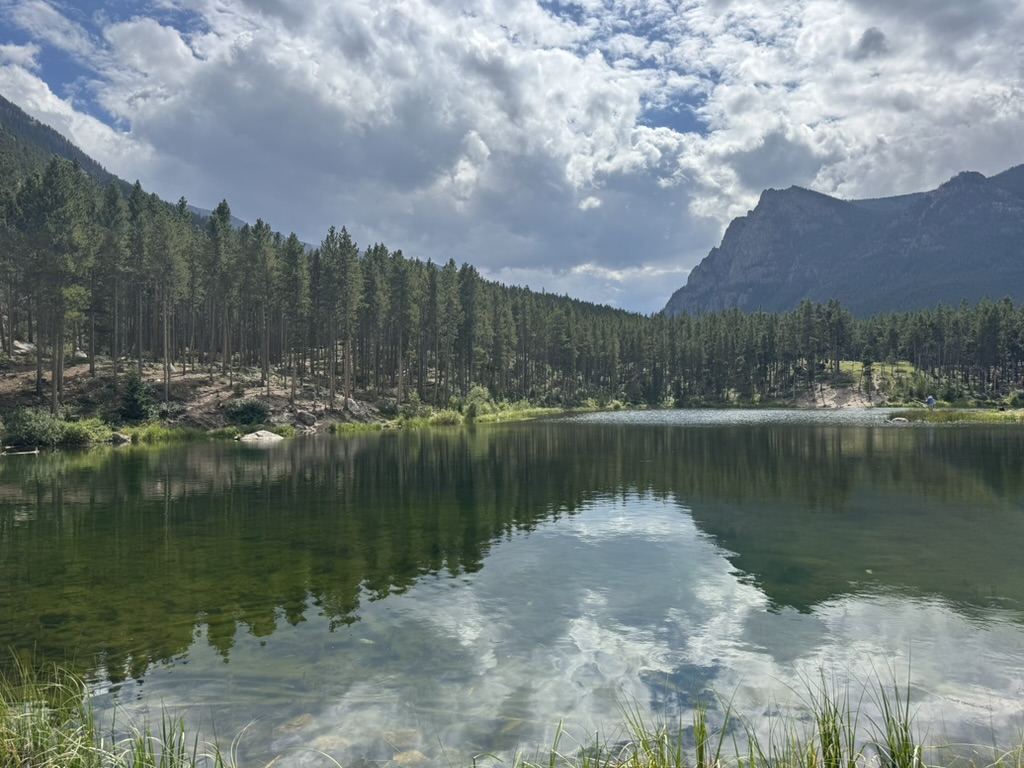
There is something about the mountains that invites reflection about God. For as long as humans have existed on this planet, they have been drawn to high places and have had experiences of the divine there. The stories of our people include those of Moses going to the mountain to speak with God, Elijah hearing the still small voice of God in a mountain cave, and Jesus taking disciples to the mountain where he was transfigured, among many other stories of leaders encountering God in the mountains. Many indigenous cultures have special mountain locations for seeking one’s vision and purpose in life.
The high country of the Absaroka/Beartooth wilderness on the border between Montana and Wyoming was sacred to the Apsáalooke or Crow people long before contact with Europeans. Young men went to the high country on vision quests. Leaders spent time there to seek wisdom and guidance.
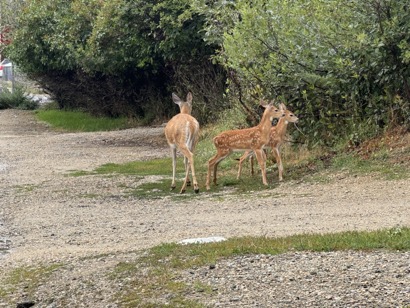
Yesterday, a short drive and a short walk into the mountains took us to a snow-fed pond. Peaks towered above us as we entered the home of bears and deer. We were silent as we walked because we sensed that words would not add anything to the experience. We were not alone. We were too close to roads and campgrounds that attract many visitors. We could have been alone in the high country by walking an additional mile or so, but the presence of others did not detract from the sacredness of the place.

Our walk took us alongside Rock Creek, a stream that begins much higher at the edge of the snow line. The creek provided music for our ears as we walked. The trees and soil provided a welcome scent. Every sense was engaged. The high country is a place of encounter with God.
As I write this morning, I am aware that my words do not adequately describe the experience of returning to the high country. I know that my spirit is refreshed, and it is well with my soul. I am grateful for another opportunity to visit this holy place.
We will soon leave the high country, bound for other places of beauty and meaning and vision. There are dear friends that we need to visit and memories that we want to share. I am reminded of the experience of Jesus’ disciples at the transfiguration. They wanted to build booths and to remain in the place of such deep encounter, but Jesus reminded them that the time had come for them to leave the high place and return to the work at hand.
Life goes on, and we return to other places. The high country, however, has transformed us, and we return with a more profound sense of the divine.
Return to the high country
Another example of the phenomenon played out in church meetings when we lived in South Dakota. We lived at the western end of the state and the largest urban area of South Dakota, Sioux Falls, is at the eastern edge of the state. We would frequently have meetings in Chamberlain. It was identified as the center of the state by church leaders. I used to say that it was a good meeting point. We would drive 210 miles to get to Chamberlain. Those from Sioux Falls would drive 140 miles, and they would believe that they had come halfway
We all have our geographical biases. Having grown up in the high country of south central Montana, for a long time I refused to call the Black Hills of South Dakota “mountains.” The hills are technically an island mountain range, but I was biased and felt that mountains had to be at least 10,000 feet tall. Crazy Peak, a mountain visible from Main Street in the town where I grew up, is 11,214 feet above sea level at the peak. If you were to stand at the top of the mountain and look east, there is no place anywhere in the United States as high.. The Great Smoky Mountains, Appalachians, and Blue Ridge Mountains are all lower.
A geographical bias that I often encounter was voiced by a friend in Washington recently. I commented that I grew up in South Central Montana and he asked the name of the town. When I told him I grew up in Big Timber, he said, “That’s in the flat lands of Eastern Montana.” While it is true that Big Timber is on the east side of the Continental Divide, it is nearly in the center of the state from East to West. The perception of my friend may come in part from having driven across Montana on Interstate 90, which dips to the south from Billings and enters Wyoming before the eastern edge of the state. If one crosses the state by traveling on Interstate 90 to Billings and then heading east on Interstate 94, Big Timber is near the halfway point in the drive across the state. It is also possible that my friend shares the bias of many people from western Montana that the western half of the state is all mountains and the eastern half is all prairie. Big Timber sits on a high plain between mountain ranges. Those mountain ranges, however, contain the highest mountains in Montana. Granite Peak, Montana’s highest point, is between Big Timber and the Wyoming border to the south. In fact, it is slightly east of Big Timber. The Crazy Mountains to the north of town contain over 30 peaks higher than 10,000 feet. The Beartooth-Absaroka range south of town contains more than a hundred peaks over 10,000 feet and 28 over 12,000 feet. I think it is fair to say that Big Timber is not in the prairies.
We are back in Montana, visiting the high country for a few days. Red Lodge, where we are staying, is 5,588 feet above sea level. Beartooth Pass between Red Lodge and Cook City is almost 11,000 feet above sea level. Although I grew up in the high country, I now live near the shore of the Salish Sea. The elevation of my home in Washington is only about 70 feet above sea level. I suppose if I went for a strenuous bike ride or ran hard, I might feel the effects of the altitude, but I am not aware that I’m not acclimated to it. The US Olympic and Paralympic Training Center is located in Colorado Springs, Colorado. at about 6,000 feet above sea level. Training at altitude helps athletes develop lung capacity that serves them well at whatever altitude they compete. People who have limited lung capacity due to illness or injury find traveling to high places to be challenging. Most of us, however, adjust to altitude easily.
I appreciate the coolness of the high country and enjoy the beauty of the mountains. Yesterday, the drive from my hometown of Big Timber to Red Lodge was familiar. I’ve driven that road a lot of times. The view was, nonetheless, stunning and inspiring. The mountains are dramatic, and the light through the scattered clouds was dramatic. I have lived away from Montana for nearly 50 years, and it still feels like coming home every time I visit. I feel blessed to have family in Red Lodge, so I have a reason to visit regularly.
I’ll get in some walking and will have time to explore over the next couple of days before heading east to South Dakota. I also need to be reminded regularly of how beautiful the Black Hills are. We lived in the hills for 25 years, and I am grateful for that experience. It was a beautiful and wonderful place to live.
I hope that I don’t suffer from too much geographical dyslexia. I want to be realistic when I describe places, and I want to celebrate the diverse beauty found in many different places.
Along the road

If you want to buy huckleberries, you have to know where to get them. I’ve been driving through western Montana at least once a year for a long time. I have my secrets. Still, you have to want huckleberries to pay $25 per pound. There are many other options for berry lovers. Flathead cherries are available most of the summer across the western half of the state and can be procured in most small towns.
When I was a child, we had relatives who lived in the Flathead Valley, and we visited them most years. Later, my sister lived and worked in the Bitterroot Valley. In those days, we knew where to pick huckleberries, with only bears to fear. When we finished graduate school, we lived in North Dakota while my sister lived in Portland, Oregon. We made many trips across Western Montana. Later, we lived in Idaho and visited family in Montana. I’ve pulled a trailer over every pass between Idaho and Montana, including the Lemhi Pass, which is now considered to be a four-wheel drive pass where trailers are not recommended. Our son went to college in Forest Grove, Oregon, so there were more trips. And, after graduate school, he settled in Washington. Before long, we had grandchildren. I know the territory and roads of Western Montana pretty well.
Now, I’m older and I have fewer secrets to keep. On this trip, we’re traveling on the Interstate for most of our drive, and the secret I have to share is barely a secret. If you ever drive up from Missoula over Lookout Pass, or drive east from Mullen, Idaho, over the same, you will see billboards that say, “Best. Milkshake. Ever.” There are a lot of billboards all across the United States proclaiming the best this or the best that. I know where there is a billboard proclaiming Montana’s favorite small town. The residents of every other small town in Montana disagree with that sign. I’ve seen signs for best pizza, best Italian food, and lots of different “bests.” I always take such claims with a grain of salt. Here is the secret. The signs that declare St. Regis, Montana, to be the home of the “Best. Milkshake. Ever.” are telling the truth. If you drive by them, you will miss something truly special.
We rarely do. We’ve been known to stop for huckleberry milkshakes morning, afternoon, and evening. Combine one with a buffalo burger or a prawn skewer and you’ve got eating that is as good as it gets.
Now that I’ve shared the secret, which isn’t a secret, don’t expect me to tell you where you can buy huckleberries. Those places don’t need advertising. If you don’t know, you won’t know.

Bound for the “Best. Milkshake. Ever.” however, we continued to head east and soon were out of the desert and into the mountains. North Idaho is spectacular country, and we always enjoy the scenery.
Today we’ll make a few more miles and see a few more sights. There is always something new to discover even on routes that we’ve driven many times before. Who knows, I may even pick up a few berries.
Road trip
Over the years, business travel resulted in many nights spent in motels and hotels. Often, the cost of our stays was covered by the church as we attended necessary meetings. However, we have generally preferred camping and have owned several campers over the years, including tents, a tent trailer, a pickup camper, and a travel trailer.
This trip, however, we are traveling light, at least compared to our usual mode of travel. We have our small car and are combining some nights in motels with nights staying with friends and family. Because we don’t stay in motels very often, we have been surprised and are experiencing sticker shock over the price of a night in a motel. I used to think that a night in a bargain motel would cost around the same amount as a full tank of gas for our car. Granted, we used to drive bigger cars with bigger gas tanks. Still, with the current price of gas relatively high, we are finding that motel rooms are running about four times the cost of filling the tank in our car. We’re early in our trip, and we’ll probably spend two or three more nights in motels before we get home. We may find a bargain that will bring down the average cost, but it is clear that we need to be willing to pay a bit more for a night in a motel than we had expected.
We live in a time of inflation, and there are lots of costs that are going up. And we know that one of the things about getting older is that we can remember farther back to times when prices were lower. I can remember lots of conversations with elders over the years when I have been told how inexpensive something was before my time, and I try to avoid complaining about prices too much, especially when I am around young people. I probably have told our grandchildren that I can remember when the cost of gas was 19.9 cents per gallon, but such numbers are generally meaningless to them. I can also remember when Motel 6 signs advertised rooms for $19.95, and the signs weren’t electronic and couldn’t be changed without having a new sign made. And they would leave the light on for you. Yes, I can remember the advertisements narrated by Tom Bodett.
The people who own and work at motels deserve fair wages and they have a lot of expenses that need to be covered before they can profit. I shouldn’t begrudge them for charing what their believe their service is worth. Staying in a motel or hotel is a luxury, and I don’t expect to have the safety and comfort offered by a motel without paying a reasonable cost. Although we love to travel, we prefer to stay with family and friends. Furthermore, even with the costs of motels and meals in restaurants, this trip will cost less than if we were driving our truck and pulling our camp trailer. There is plenty of sticker shock with a night in a campground these days. Since the COVID-19 pandemic, campgrounds have become significantly more expensive. Some of the campground resorts charge at least half of the price we paid for the motel room where we are staying.
We are lucky to have enough discretionary money to take a road trip.
We have friends and relatives who seem surprised that we enjoy traveling the way we do. Some of my family members have declared that they hate to drive through Seattle traffic. Others have said that they don’t like to travel hundreds of miles by car. I don’t see the travel we are doing as a burden. I enjoy driving. I like to cover hundreds of miles in a day. I like to see new scenery. Sometimes traffic and other drivers can be frustrating, but I am pleased that I can still safely navigate heavy traffic and know how to get around in cities and open country. And even with prices that are a bit higher than expected, I don’t mind spending an occasional night in a motel.
Still, I don’t think we are done camping. We probably will downsize to a smaller recreational vehicle before too much longer. However, we prefer the meals we cook to those eaten in restaurants most of the time. We are not fans of fast food. Since we are not in a rush on this trip, we are seeking out meals in independent cafes and restaurants and prefer to stay in little “mom and pop” motels that are often located on back roads away from the Interstate. Even though we will be making miles on the Interstate in the next couple of days, we still prefer traveling on the back roads, and we’ll find plenty of two-lane highways on this trip.
It is all an adventure, and we are lucky people to have each other to share the adventure. And, who knows, maybe we’ll find a real bargain tonight after we’ve put a few more miles behind us.
Puzzles
There was a phase in my preteen years when I would occasionally take two or three pieces from the puzzle and hold them until the puzzle was completed and their absence was discovered. Then, as everyone was looking for the missing pieces on the floor, I’d slip in and complete the puzzle. That trick didn’t last very long. It wasn’t popular with family members who had done the work of solving the puzzle.
As an adult, I have not taken up jigsaw puzzles as a hobby. I worked on a few with our daughter when she was growing up, but when I think of recreational activities, jigsaw puzzles don’t come to mind. I think that the puzzles we once had have all been donated to rummage sales.
Occasionally, however, I will spend some time searching and putting a few pieces into a puzzle when we visit a friend or family member who has one out. Yesterday was one of those days. We are visiting my wife’s sister and her husband, and there is a puzzle in progress at their house. As we sat visiting in front of the puzzle, I found and fitted a few pieces. After dinner, I worked on the puzzle with my brother-in-law while Susan and her sister talked over a cup of tea.
Like many other things in life, we each have our ideas about how best to approach solving the puzzle. I like to look for particular shapes and patterns of color in individual pieces. I don’t invest much time looking at the picture on the box. I am more interested in the relationships of the pieces. My brother-in-law, in contrast, takes a picture of the box so that he can enlarge the image on his tablet computer to study the details and uses his familiarity with what the completed image will look like to find the pieces he is looking for. He is very goal-oriented. He seemed driven to complete the puzzle as soon as possible. He showed me a couple of other puzzles that he had recently completed and a couple more that he planned to complete when the current puzzle is finished. I’m pretty sure he will finish the one we were working on last night today. I don’t care whether or not the puzzle is completed. I don’t need to see all of the pieces in their proper places. I’m content to fit a few and forget about it.
Whether the puzzle is completed or not is not important to me. The point of the exercise was to have something to do with our hands while we conversed. My goal-oriented brother-in-law, however, seemed more interested in talking about the puzzle and where the pieces fit than in other topics. By the end of the evening, I was eager to forget about the puzzle. I don’t know how long he worked on it after I excused myself and went to bed. Perhaps it will be completed when we gather for breakfast this morning.
It seems highly unlikely that I will work on another puzzle soon. It isn’t that I dislike the activity, it is just that when I think of things to do when I have a little extra time, getting out a puzzle doesn’t come to my mind.
My choice of hobbies and activities changes frequently, however. A time may come when I am more interested in puzzles. I doubt, however, that I will ever adopt the techniques of my brother-in-law. I suspect that he will always be better at fitting the pieces than I am. I have no problem with that.
Thinking of how some people bring a bit of competitive spirit to solving puzzles, I checked online to discover that there are official associations that organize jigsaw puzzle-solving contests. There are US and International championship contests held every year. I doubt, however, that the competitions draw big audiences. At least the thought of watching someone else complete a puzzle, no matter how quickly, doesn’t seem to me to be exciting.
Then, again, my brother-in-law plays golf and enjoys watching golf tutorials on YouTube. I like my brother-in-law, but his recreational passions are a long way away from mine. Golf is another game that I doubt I’ll ever take up, and I know I have no desire to watch. I can think of dozens of books I’d like to read and essays I’d like to write in which I’d prefer to invest my time and energy over watching people play golf.
Part of the joy of visiting family and friends is discovering how we are different. If we had not married sisters, I doubt that my brother-in-law and I would have ever become friends. We are attracted to entirely different recreational activities. What we have in common is love for sisters. And that illustrates the differences between the sisters. They have chosen two very different partners. We are all happy, and it is evident that the right sister chose the right mate.
Today we’ll start a couple of days of longer-distance driving. I’ve always enjoyed road trips, and I’m looking forward to the drive. My brother-in-law commented that he doesn’t like to drive long distances. We’re different in that way, too. We aren’t exactly traveling light. Our car is packed with a variety of other things we enjoy. As far as I know, however, we haven’t packed any jigsaw puzzles. I don’t expect to need more time solving puzzles right now.
Urban delights
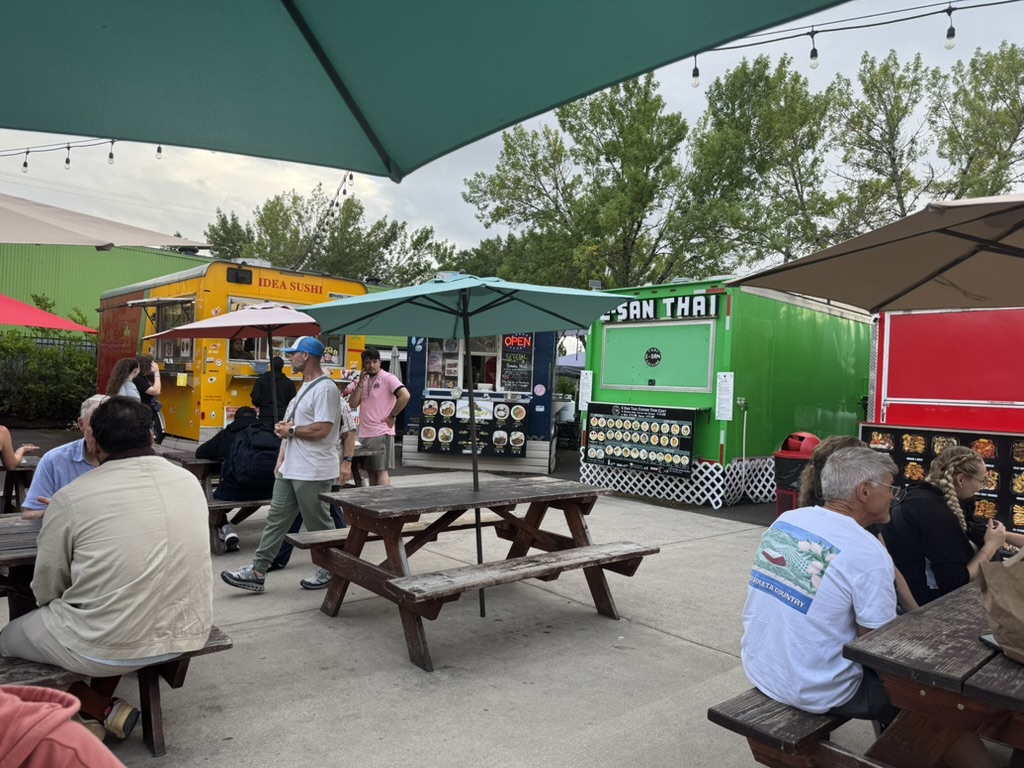
Yesterday, in my journal, I complained a bit about urban traffic. However, there are good reasons to venture into cities and go through the challenges of traffic. Last night was a good reminder of why we continue to be drawn to urban centers.
There are people who live in urban areas whom we love. We are visiting my sister and having a wonderful time telling stories and remembering our many shared experiences. The inconveniences of traffic are minor compared to the joys of being with family. We had several hours yesterday to visit with my niece and her daughter. I love being an uncle and a great uncle. I enjoy being with my family. And I know why my sister lives where she does. Being just a few minutes away from her daughter and her daughter’s family is a joy that is well worth any inconvenience.
There are also services and activities in cities that don’t exist outside of urban corridors. My sister and niece don’t live in Portland, Oregon proper, but rather in a nearby suburb. They deal with urban traffic every day. They have adjusted in ways that I have not. When I suggested that we go out for dinner, there was a long list of possibilities. The immediate area is filled with a variety of restaurants. Making a choice was challenging. We decided to sample a food court.
Across from the City Hall of Beaverton, Oregon, is a block with just a few buildings. The rest of the area is filled with many food carts. Most are trailers that have been moved in and hooked up to water and electricity. In the center of about 30 carts are picnic tables, umbrellas, open spaces for children to play, and benches for sitting. Each food cart offers a different type of food. We walked around the court viewing menus of burgers and hot dogs, sushi, gyros, tacos, waffles, Thai food, fish & chips, bubble tea, ice cream, and many other types of food. We made our choices from a couple of carts and took our food to the tables where we were surrounded by people enjoying the pleasant summer evening, good food, and each other. People were speaking a half dozen languages. There were lots of children laughing and playing.
As we enjoyed our dinner, I realized that we live in an area without the amazing diversity that was surrounding us. It wasn’t just the delightful choice of different foods from around the world. It was the gathering of people of all kinds of different ethnic backgrounds. Diversity is delightful, and our small area is a bit more homogeneous.
I know that such a gathering place is the result of careful urban planning and measured support. I suspect that the land where the food court is located is owned by the city and that the rent for the carts' parking spaces is reasonable. There must be a system of providing for the common areas, the restrooms, and other infrastructure required for such a food court. The people who staff the carts need fair wages, health care, and other benefits. Although we didn’t see a law enforcement presence, the safety of those sharing the space must be assured, and some rules need to be enforced to ensure the system operates effectively.
I’m sure that there were more food carts in that one urban block than there are in the entire county where I live. The food cart court is one of several within a small area. I’m confident that there are more food carts in the western suburbs of Portland than there are in the entire state of South Dakota, where we lived for 25 years. There are activities, services, and experiences that occur only in urban areas.
I feel fortunate to live where we do. I continue to be a small-town kid at heart. I’m more comfortable in places with less traffic and more individual space. I don’t have to deal with strangers daily, unlike people who live in dense urban areas. I hope, however, that I will continue to visit and appreciate cities. I don’t subscribe to the myth embraced by some of my neighbors that cities are more dangerous and should be feared. Cities can be safe places for people, and communities can be found in urban areas. People don’t have to be spread out to live in peace.
Most of the people in the world live in urban areas. Many cities are larger and more diverse than Portland, Oregon. I’ve had the joy of visiting some of those cities. Each has its unique character.
We leave Portland this morning to visit other places, and most of this trip will be traveling through areas with fewer people and less traffic. I am, however, glad that we have had our urban experiences, and I know that we will be back.
Traffic
Another factor in their driving skill is that they both learned to drive in Rapid City, South Dakota. The Black Hills play host to the Sturgis Motorcycle Rally early in August each year. The rally is going on this week. For our children learning to drive, their early experiences with heavy traffic involved thousands of motorcycles. They learned to look carefully and maneuver cautiously in traffic.
I learned about driving in traffic from our years living in Chicago. I remember the first time I experienced bumper-to-bumper traffic on the freeway. I had been advised to turn on my radio to get traffic reports, so I knew that I was driving directly into an area of heavy traffic. However, I didn’t have an alternate route planned. The only way I knew to get to my destination was to drive right into the traffic. I remember driving stop-and-go for several miles. Urban traffic surges. It will slow, at times, to a complete stop. Then there will be some motion. Sometimes the traffic will move at a faster pace, up to 30 or 40 mph. Then it slows again, often suddenly. You have to be paying attention to the brake lights ahead. As a result of the surges, rear-end accidents are common, creating more congestion. Drivers then have to be skilled at changing lanes.
I have driven in heavy traffic in many cities. After Chicago, I have driven in New York, Washington, DC, Minneapolis, Seattle, Portland, San Francisco, Los Angeles, London, Melbourne, and other cities. I am, however, still a small town boy at heart. I prefer to stay away from traffic. I enjoy the open road with few cars in sight. I often choose country roads over the Interstate. It mtight take a bit longer, but the driving is less stressful.
Yesterday was a heavy traffic day for us. We left home a little after 1 pm, heading south. That got us into Seattle traffic before 3. In the summer, however, workers in downtown Seattle are heading out of the city by mid-afternoon, and the traffic was bumper-to-bumper from Everett to Olympia. That is about 80 miles of heavy traffic. If the traffic had been light, it would have taken an hour and a half, but yesterday it took twice as long. When the traffic began to open up, just being able to go 50 mph was a relief. From Olympia to Portland, Oregon, we were able to go 60 to 70 mph.
I saw plenty of examples of dangerous behavior from the drivers. Passing on the median, cutting off other drivers, changing lanes, causing others to brake suddenly - there were lots of examples of what not to do in heavy traffic. Fortunately for us, we were able to negotiate the traffic safely and arrive at my sister’s house at about the time she was expecting us.
We will be visiting family in Portland, and going out to the Oregon coast before heading east at the end of the week. I’m looking forward to driving across less populated areas of Oregon, Idaho, Montana, Wyoming, and South Dakota. We’ll be arriving in South Dakota after the heaviest motorcycle rally traffic. It will be good to have some time on open roads driving at speed.
The world is becoming more crowded. In the United States, transportation systems have not kept up with the population growth. There are other places in the world where dense populations can move about in different ways. We have visited Japan twice. Both times we flew into the Tokyo area, where there are two International airports. Traveling about the city is easy, however, because the train system works so well. Outside of the city, high-speed rail takes people wherever they want to go. We didn't need a car in Japan. We purchased rail passes and were free to travel wherever we wanted. Navigating the rail system is easy even for folks who do not speak Japanese.
There is a train service between our home and Portland. Family members have found it to be a good alternative to driving in Seattle traffic. However, that is the only portion of our current trip that would be practical by train. There is no passenger train service to Rapid City, South Dakota. It is possible to travel by bus, but the times are not convenient and it would take much longer than driving our car. So we drive in traffic and put up with all of the other drivers who have places to go.
For much of yesterday’s drive we were in areas that have high occupancy vehicle lanes. A high-occupancy vehicle in Washington is any vehicle with more than one person. Two of us made us eligible to drive in the HOV lanes. Only a small fraction of the traffic was able to use those lanes, however. At least 80% of the vehicles on the road had only one occupant. Ride sharing could reduce urban traffic by 40% or more.
I am not an urban planner. I am not a transportation authority. But it is easy to see that many problems with urban traffic need to be addressed. So far, however, it doesn’t seem to be a priority for those in power.
Waiting
However it is measured and described, the experience of time varies widely. An hour spent playing with my grandchildren feels entirely different from an hour stuck in traffic in Seattle. My perception of the passage of time changes depending on my activity, mood, and other factors.
Some of my educational colleagues assert that our perception of time varies with human development. They assert that waiting is easier as we age because we have accumulated memories over a longer period. A year is half a lifetime to a two-year-old, but a much smaller fraction of the life of an older adult. My personal experience bears this out in some ways. Birthdays seem to be coming about faster than I perceived when I was younger. Children seem to grow up more quickly with each generation. On the other hand, however, there continue to be times when waiting is hard for me.
A dear friend of ours suffered a brain bleed last week. The initial experience was almost as if time slowed. His spouse called for help, and it seemed like the time for the paramedics to arrive was much longer than a few minutes. Then time seemed to speed up as he was rushed to the local hospital and quickly prepared to travel to a Level I trauma center by helicopter. After his initial treatment in the trauma center, doctors are allowing time for him to heal partially and stabilize before performing surgery. The couple is now in a vigil as they wait two more days before the surgery is performed. At first, it seemed like death might be imminent and things might go too quickly. Now, time is passing slowly as we wait for surgery and the information it might provide as to short-term and long-term outcomes.
Hurry up and wait is a feature of medical treatment in the United States. As a pastor and chaplain, I’ve spent many hours in hospital emergency waiting rooms. Waiting and the anxiety that waiting produces are features of those places. People don’t sit comfortably there regardless of the choice of furniture, decorations, or lighting.
Years ago, I served as an emergency care technician and ambulance driver. Two trips stand out in my memory of that time. Once, we rushed to a location about a half hour from town to tend a man who had broken his hip. Although we weren’t able to make a complete diagnosis, we were pretty sure of the fracture as we assessed his pain and carefully transported him to the ambulance. I drove more slowly with the ambulance loaded than I had going to the place of the accident, as I didn’t want to have sudden motions or rough roads jostle the patient. Then, after assessment in the local hospital, we were asked to transport him another 165 miles to a VA medical center where surgery would be performed. This trip took three hours. Although he had been given pain medication, his discomfort was obvious. I’m sure it seemed to the patient that the process took a very long time.
Another ambulance trip was with a newborn infant and a medical team, including a doctor. This trip was 150 miles to a hospital with a neonatal intensive care unit. I had previously driven that route in two hours in the ambulance, but it took over four hours this time because the doctor called for us to stop each time the infant stopped breathing, and the team had to work to resuscitate. By the time we arrived, we were all exhausted from the tension, but elated that we were able to transfer the infant to care in a center with all of the required resources. We stopped for coffee in the hospital cafeteria and sat in silence, too weary to talk. On the way back home, the doctor stretched out in the back of the ambulance and slept. I stayed wide awake and had trouble sleeping even after I was in bed at home.
How we experience time varies widely.
Reflecting on time and the vigil of our friends at Harborview Medical Center in Seattle, I have written a prayer:
Creator who has always been, Creator who always will be, we who are mortal are not practiced at the art of waiting. We prefer quick results, speedy service, and instant gratification. And so, we pray for the patience of the universe when we find ourselves in seasons of waiting, even though we know that what we need is just a deep breath, the practice of calming our minds and spirits, and the reassurance of the love that surrounds us. Since you have already given us the patience we need, we ask for your patience with our anxiety about the waiting times.
In the vastness of the universe, what is another minute, another hour, another year, decade, or century? We, however, cannot fully conceive that vastness and experience a few moments as if they were hours and days. When the doctor says the time is not right and we must schedule a procedure for later, all we can think of is, “When will it be over?” When we are told to relax, our anxiety and heart rate increase.
May we find each conversation to be a unique gift of community. May we see each breath we take as a unique gift of the spirit. May we find the grace of patience and vision for the wider journey. And most of all, may we find gratitude for the present moment and live it fully right now.
In the grace of this moment, Amen.
Truth will prevail
While this principle has long been a part of our heritage, it has not always worked out in practice. As I was beginning my career as a pastor, many local pastors were speaking out against US participation in the Vietnam War. This was seen as unpatriotic by some members of the church and conflicts between pastors and congregations sometimes became so deep that the pastors were dismissed from their positions. Congregations were divided in their opinions about the war and the role of the United States in it, and they turned to pastors for leadership and guidance. In many cases, pastors helped guide congregations through careful study and reflection, allowing members to form their own opinions and take their own actions. In other cases, the gulf between the convictions of members became so deep that congregations split over the conflict.
It wasn’t the only time in the history of the church where deep divisions over social issues formed. Pastors came into conflict with congregations over the practice of slavery. Although the predecessor denominations of the United Church of Christ adopted an anti-slavery position early in the history of our country, many members continued to participate in slavery as long as it was legal. Preaching against slavery resulted in the loss of jobs for pastors, the division of congregations, and, in some cases, the closing of churches.
Other social positions have resulted in conflict between pastors and congregations, including racial justice, reproductive rights, justice for LGBTQ+ members, and equal access to marriage.
Our denomination is not the only religious group that has struggled with freedom of the pulpit. The concept is a deeply honored tradition in other denominations as well as in other faith groups. Jewish Rabbis also have a long history of freedom of expression and interpretation. Arguing about the meaning of scriptural texts is deeply ingrained in Judaism, and leaders are honored with both freedom and responsibility to seek the truth as they understand it.
These traditions are deeply rooted in the conviction that God’s truth is more profound than the opinions of individuals. No human authority, regardless of the power it wields, is capable of knowing or possessing the complete truth. As such, the centralization of power has been held suspect among faithful people since before the time of the prophets. The prophetic tradition in scripture informs this suspicion.
Human freedom encompasses more than religious beliefs and opinions on social justice. For millennia, scholars have been urged to seek the truth even when their discoveries open new ways of understanding.
Authoritarian leaders are threatened by the concept of individual freedom. They seek to control the sources of information, co-opting news outlets in favor of propaganda, controlling funding of scientific research, and seizing control of religious institutions. Such efforts can be highly effective in the short term, but ultimately end in failure. The quest for freedom and truth is deeper than the power of politicians. Despots arise, but they also fall. Repressive regimes may last for a long time, but the will of the people eventually arises.
The current autocratic leadership of the government of the United States is seeking to control the expression of ideas and opinions that differ from those of the president and his inner circle. They have used economic pressure as their primary tool, cutting federal funding to institutions that have supported the freedom to speak out and filing lawsuits that generally would not be successful in the courts, but can cost defenders massive amounts of money. In many cases, it appears that the oppressive tactics are working. Longstanding institutions of education are struggling. Scientific research is being curtailed. Sources of news are being silenced.
Truth, however, cannot long be suppressed. It will rise again. A symbol of that resilience may be found in a particular genre of music. I’ve heard people proclaim that classical music is dead for much of my life. However, I have had the privilege of listening to young musicians playing classical music. The passion that 15- to 18-year-olds can bring to music that is hundreds of years old is incredible. I have been privileged to listen to young musicians and know that the rise in popularity of other musical genres does not threaten the power and beauty of classical music.
In an attempt to control independent media, congress has defunded the American institution of public broadcasting. The closing of the Corporation for Public Broadcasting threatens will have widespread fallout. It has been estimated that 96% of all classical music broadcast in the United States is on public radio stations. Access to classical music will be severely limited in many areas as a result of these decisions.
Classical music, however, will not die in this generation. As the Nazis learned in their attempts to weaponize music, often playing out their brutal oppressions against a backdrop of forced musical performances, the music is stronger than the current political regime.
It may be harder to access classical music, but the music will remain powerful. Courageous teachers will continue to introduce music to eager students who will infuse it with passion and energy. The big concert halls may go silent for a while, but the music will remain.
Like the music, the truth will continue. Its expression may be suppressed in some settings for a while, but lies and liars do not live forever.
Climate anxiety
Recent years have brought increases in wildfires to the Pacific Northwest. Some communities have seen threats year after year. The Lytton First Nation, northeast of Vancouver, has had fires that forced evacuations five years in a row. The village of Lytton was mostly destroyed in 2021, and there is currently a fire burning south of town that has forced evacuations.
It has been so intense that Provincial authorities have been developing strategies to help people deal with the anxiety that comes with the summers filled with smoke, danger, and evacuation orders. The province has agreed to give B.C. wildfire fighters earlier pensions. The stress of constantly dealing with fires that destroy homes is affecting the province's ability to recruit new firefighters. Psychologists have noted an increase in climate anxiety. People wonder what the future will hold. Will there be clean air and fresh water for their children and grandchildren? Will famine, fire, floods, and water wars be the shape of what is to come?
For some people the heightened distress in response to the climate change has become all-consuming. As temperatures rise, so does the cost of keeping cool, even in northern places where it is only recently that people have felt a need for air conditioning. We have a heat pump that provides cooling for our home, but many of our neighbors do not. We have noticed an increase in the number of window air conditioners in our neighbors’ homes. Those air conditioners contribute to increases in energy demands. Our power company regularly issues warnings about energy consumption as it struggles to meet the growing demand. Fortunately for us, we have a solar system that produces more electricity than we consume. Our solar system is most productive when we're using air conditioning, so we haven’t been feeling guilty about setting our thermostat for cooling. During a recent flex event held by our electric utility, our home was found to have the lowest energy consumption of the houses in our neighborhood.
While it is nice to be recognized for our efforts to keep our overall energy footprint small, we, too, wonder about the future for our grandchildren. Among the climate anxieties that we experience is our worry about the impact of climate refugees coming to our area, fleeing less favorable weather in other locations.
One of the realities of climate change is that it is often those who have contributed the least to the climate crisis who suffer the most. In Canada, Indigenous communities make up nearly half of all wildfire evacuations. People who do not have big homes, many of whom do not have air conditioning, and who haven’t contributed to the climate crisis by excessive airline travel, find themselves in the line of fire. At the same time, urban dwellers who have been far more consumptive of fossil fuels live in relative comfort and safety.
Increasingly, those who are working to ease the effects of climate change are recognizing the injustices of the climate crisis. Those who are suffering the deepest from the crisis are not the ones who have contributed the most to it.
For most of my life, summertime has been a season of promise. When I was in school, I looked forward to summer vacation. As a child, we spent our summers outdoors, playing in the river, fishing, hiking, and exploring. Summer provided freedom from spending most of my days indoors. Although I had a job that offered ample opportunities to go outside all year round, I looked forward to summers when I was working because our children had vacation from school, programs at church were dialed back. We had even more opportunities to spend time outdoors. I still look forward to summer each year. The promise of blooming flowers, fresh produce from the garden, and busy bees filling the comb with honey makes summer a season to which I look forward. But I notice the signs announcing mandatory water use rules in our neighborhood. Even though I am a relative newcomer to this area, I am aware that a place that rarely experiences drought has been much drier than it was in the past. Conserving water is an essential part of living responsibly with our neighbors.
We are fortunate still to have easy access to plenty of outdoor activities. The air currently is clear in our location, and we are not under threat of wildfire. I can kayak and bike with my grandchildren and build summer memories with them. We share meals outdoors on our deck and go camping together. We walk daily. Still, we do our best to be ethical consumers of energy and to develop sustainable practices. We know that part of our lifestyle is the result of having more disposable income than some of our neighbors, so we try to invest that income in practices that benefit others. We are learning to become comfortable with less stuff, less travel, less instant gratification.
We walk down to the shore and gaze out at the islands, and it's clear that climate change is real. The smoke that colors our sunsets is choking our neighbors on the island. So far, we have been free from the most intense effects of climate change, and we are not experiencing the anxiety that so many others live with daily. We try to be mindful of them and the effects of our lifestyle on them as we make choices about our lives.
Happy at home

We plan to take off on a trip next week and I think we have our timing just right. Walking around our yard I see that the tomatoes are just starting to come on strong. We’ll get a few of the delicious fruit from the vines before we depart, but there are going to be a lot for our son and his family to harvest while we are gone. A similar thing is happening with our dahlias. There are some lovely blossoms right now, but it looks like the peak of the bloom will come when we are traveling.
Unlike our forebears, we don’t schedule our lives around the cycles of agriculture. The timing of our trip is influenced by the schedules of some of the people we are visiting, our schedule for camping trips with our grandchildren, visits from others, and other factors. We didn’t even consider what would be happening in the garden when making our plans.
The good news is that nothing will go to waste. Our son and his family will be looking after our house while we are gone and they will pick tomatoes and cut dahlias for their home. Likely, they will also have their tomatoes and dahlias to deal with, but it will all work out without problems.
It is pretty easy for us to leave our house. There aren’t that many chores that need to be done, and our son lives close. He will check on the place regularly while we are gone. We do the same for them when they travel. Their place is a bit harder for them to leave because they have chickens that need to be fed and have their eggs gathered. They also have a large dog that needs food and attention. The dog comes to our house to stay when they travel, but I take it back to the farm every day to run. Our yard is a bit small for the dog.

I like eating tomatoes fresh-picked from the vine. I like cutting a bouquet of dahlias for the dinner table. I like having grandchildren over to our house. In the past few days, I’ve kayaked and ridden bikes with our grandchildren. I wouldn’t want to miss those experiences.
More importantly, I enjoy the security of knowing that others will come to my aid when I need them. Susan and I are not just on our own in the world. We love traveling together and will continue to do so as long as our health and resources permit, but we enjoy having a home base. We don’t have to pack up and move once a month. We have room to host guests.
We may not have gotten all of the timing right, but we’ve ended up with a lifestyle that works for us. And today, I have fresh tomatoes and flowers.
Small changes in a new month
Looking forward to this summer, when our grandchildren were still in school, it seemed like we would be able to go camping several times because they had time off from school and we had an open schedule. When we got down to actually scheduling camping trips, we ended up with two overnight camps and one slightly longer three-day trip in three weeks. We head back home today. On Sunday, their family takes off for a short family vacation, leaving us with farm chores and care of their dog. On Tuesday, we begin a trip to Oregon, Idaho, Montana, and South Dakota.. I find myself sitting down with others and going over schedules as much now as I did when I was working.
I don’t mean to complain. I have a wonderful life and am surrounded by family. Yesterday I went kayaking with three of our grandchildren. Today we’ll take our bikes on a trail that I’ve been wanting to explore. Next week I’ll have time with my sister and with both of Susan’s sisters on our way to visit friends in South Dakota. We have the freedom to travel and the time to enjoy fun and interesting people.
However, it is complex. I’ve been exchanging emails and text messages with friends while we are camping. A dear friend suffered a brain bleed a couple of days ago, and his spouse is keeping vigil while he recovers at a specialty hospital in Seattle. I composed a prayer for the couple and sent it to them because we are unable to sit with them in person due to our other commitments. For them, this is the most critical thing in the world right now. It is their highest priority.
My personal prayer list is as long and complex as it was when I was serving as pastor of a congregation. The joy of life in community is balanced by concern for the health of those we love. There have been times when life seemed to stand still when one of my beloveds was in the hospital. But life goes on.
I am surprised to discover how much I enjoy routines in my life. I thought that being retired would involve doing new things nearly every day. I enjoy new ideas and new experiences, but I also enjoy things that repeat. I like to go for a walk with my wife every day. I want to ride my bike every day. We have dinner with our grandchildren almost every Saturday. I enjoy routines. This journal is one of those routines. I had planned to have stopped daily essays by now. July 16 was the eighteenth anniversary of the daily publication of my journal. But writing has become a habit. And I am slow to break habits. So I continue to write and publish my journal. Now I am telling myself that when I complete the remodeling of my website, I will shift from publishing daily essays. I don’t know when I’ll get that job done. I may be publishing daily for some time now. Or perhaps I will cut back and skip a day now and then. I am not sure.
What I do know is that with the complex pace of my life, it helps me to rise and write for a while each morning. I sort out my thoughts. I make time to pray for this wounded world. I express a few of my thoughts in words. And when I have written for a few pages, publishing my words to the website is a tiny job that takes just a minute. During a busy life with complex schedules, something is reassuring about a repeated task. I know how to write and post to my website.
I am, however, making a change with today’s entry. As we enter a new month, Most of my journal entries are between 1,000 and 1,200 words. I set a goal of writing a 1,000-word essay early in the process of writing my journal. I’ve proven to myself that I can do that task. In the future, my journal entries will vary in length more than they have in the past.
I may find comfort in routines, and I have many habits, but I am also capable of change.