A Walk in the Park
12/04/21 03:28
Just south of Ferndale, Washington is a public park called Hovander Homestead Park. Whatcom County purchased the park from the Hovander family and opened the park in the early 1970’s. It includes about 350 acres with a huge barn and a big house. There are gardens, an orchard, and a few animals are kept, including ducks, geese, rabbits and goats. There are two observation towers on the property which give great views of Mount Baker and the northern cascades when the weather is clear. Part of the property lies alongside the Nooksack River and it extends to the southwest corner of Tennant Lake. There are several miles of walking trails and we occasionally stop at the park to walk when we are on our way home from visiting our son and his family at their farm in Ferndale.
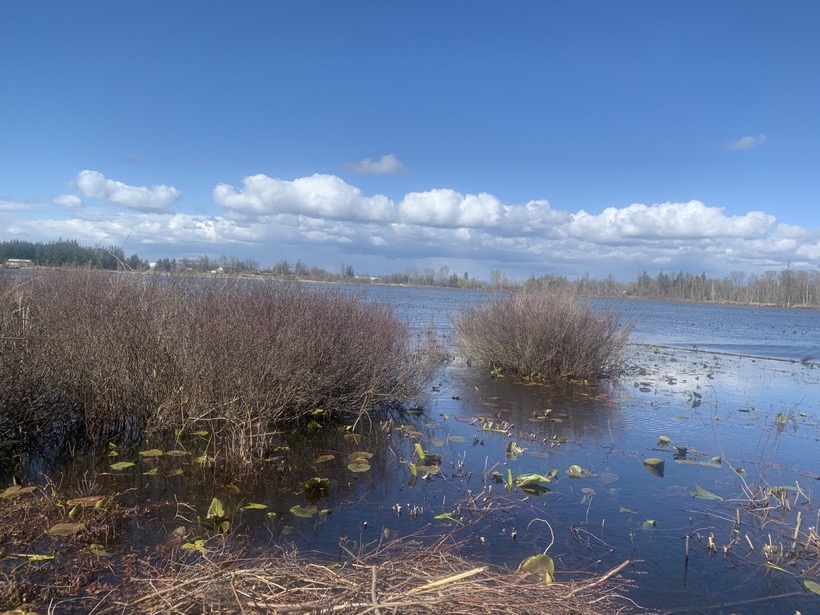
When we first started visiting the park, waterfowl season was open here in Washington and the part of the trail system that marsh and peat bog near the lake was closed to walking for the safety of visitors. There were plenty of other places to walk, so we continued to visit. On Saturday when we stopped to visit we decided to explore the now open trail that leads to the lake. It was a delightful treat.
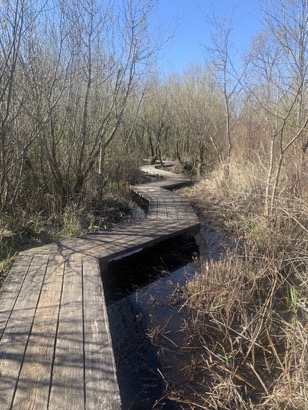
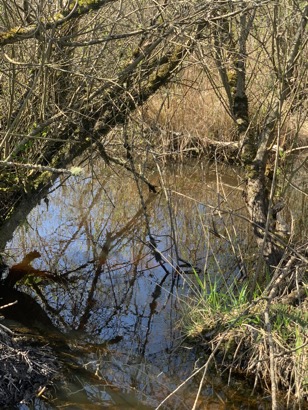
There is a large loop of boardwalk that extends across marsh, swamp, slew and wetlands to the shore of the shallow peat bog lake filled with water lilies. The water is relatively high this spring and there are several places where the water is nearly as high as the boardwalk so it feels like we were walking right on the surface of the standing water. We had a clear spring day and there were no mosquitoes around when we took our walk.
It was a reminder of just how different this part of the world is from the other places where we have lived.
I don’t know much about the Hovander family story except that they were immigrants from Sweden who purchased an existing farm with a couple of log cabins in the 1890’s. In the early 1900’s they built the large house and barn on the property. The wood for the house was soaked in linseed oil for two years before it was used. The barn was originally painted with a mixture of oil and red clay. These treatments of the fir and cedar harvested from nearby forests resulted in preserving the wood and the integrity of the structures that appear to be in very good shape.
I wonder what challenges the Hovander family encountered as they learned to live in their new place. One of the interpretive signs says that Hokan Hovander was originally a brick layer. He must have had to learn new construction techniques to build with the materials available in the Pacific Northwest. There are no bricks in the house. There are no fireplaces. The house was one of the first homes in the area designed with a central heating system. Every room of the house has multiple doors that can be opened and closed to direct heat throughout the house. It was seen to be a very innovative design for its time. Clearly members of the family adapted and learned new ways of living in their adopted home.
All of us, including the Hovander family, are newcomers compared to the indigenous people who lived along the coast and in the foothill forests of this region. They understood the rise and fall of the water and knew where to build structures and where to fish and gather food. Much of that indigenous knowledge was ignored by settlers who might have benefitted from native teachings. We hope we are being a bit more wise, talking to locals and exploring the area a bit before choosing a house in which to settle. Nonetheless, I’m sure we’ll make all kinds of newcomer mistakes, some of which may amuse those who have lived here a long time.
In the meantime, we are taking great delight in exploring the area and finding new places to walk and explore.